

Dumper Training Courses in the UK
Master Your Skills with Our Dumper Courses
Looking to elevate your career in construction? Dive into our CPCS/NPORS Dumper Training at Construction and Plant Training Services! Master vital machinery with confidence. In this cutthroat industry, showcasing your unique skills can make all the difference. By joining us, you’re not just training; you’re building your future!
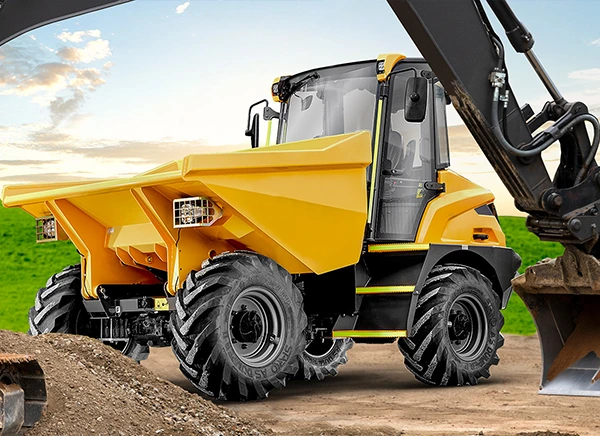
Forward Tipping Dumper Training
Forward tipping dumpers frequently play a pivotal role on construction sites due to their ability to transport materials efficiently across challenging terrains. To help you excel, we focus on hands-on learning as well as theoretical understanding. Specifically, our Forward Tipping Dumper Course covers:
Machine Components & Functions. We explain all key parts, controls, and proper terminology so you can confidently identify and handle each element.
Safety Protocols. We demonstrate safe operating procedures, including loading, tipping, and manoeuvring in confined spaces. Furthermore, we provide clear guidelines that help reduce the risk of accidents.
Hands-on Practice. Under the direct supervision of our expert instructors, you actively gain real-world experience. Consequently, you will leave the course fully prepared to tackle on-site challenges.


Rear Dumper Training
Rear dumpers, due to their larger size and greater capacity, remain indispensable for heavy-load tasks on extensive projects. We designed our Rear Dumper Course to deepen your understanding of these more complex machines. In addition, we emphasize practical techniques that will enhance both your efficiency and safety. Throughout this programme, you will:
Master Advanced Mechanics & Controls. We teach you about the specific components and complex systems that characterize rear dumpers, ensuring you understand exactly how each part operates.
Optimize Load Management. We instruct you on how to balance, distribute, and move heavy materials effectively, thus increasing productivity.
Boost Efficiency & Safety. We show you proven operational strategies to minimize downtime and reduce the risk of accidents. Moreover, we coach you to apply these methods in a variety of work environments.
Book Your dumper training today!
Our dumper courses
See all our CPCS/NPORS dumper courses to get your dump truck licence (ticket) in the UK


Why Choose Construction and Plant Training Services?
Choosing the right training provider matters. At Construction and Plant Training Services, we prioritize quality and relevance, ensuring you receive exceptional value:
CPCS-Accredited Training. We align our dumper courses with CPCS standards so that your certification holds recognition throughout the UK construction industry.
Expert Instructors. Our seasoned professionals offer personalized guidance, and, in addition, they adapt their teaching methods to suit your experience level.
Realistic Training Environment. We maintain a spacious training area equipped with modern machinery to simulate real-world conditions, thereby enhancing your practical learning experience.
No Prior Experience Needed. We welcome beginners, and we will help you progress quickly, even if you start without any on-site background.
Competitive Pricing Guarantee. We remain committed to offering some of the lowest dumper training prices in the UK. If you find a similar course cheaper elsewhere, we will match the price.
Enrol today and boost your career with a dumper course
Unlock your potential! Investing in your growth opens doors to exciting job prospects and fatter paychecks. Why wait? Dive into our dumper training courses today! Reach out to discover enrollment and scheduling options. We’re here to help you build a brighter future in construction!
Do you have any questions about our dumper courses?
Find Dumper training near You in the UK :
What is dumper training? See our video:
Dumper training in the UK. What do you actually need to become a trained dumper operator?
Searching for dumper training, a dumper course, dumper truck training or a dumper driver course can become confusing surprisingly quickly. One website talks about a licence. Another calls it a ticket. Then you see CPCS, NPORS, Red Cards, Blue Cards and different machine categories. Which one do you actually need?
The simplest answer is that there is no single universal construction site document called a dumper driving licence that covers every type of dumper. In everyday site language people often use the words dumper licence, dumper ticket or dump truck licence. What normally matters is evidence that you have been trained and assessed for the relevant machine category, together with the competence, familiarisation and authorisation required for the work you are going to perform.
That distinction matters. A forward tipping site dumper is not the same machine as a large articulated dump truck. Being comfortable with one does not automatically mean you should jump into the other. The category, machine configuration, site conditions and employer requirements all need to match.
Dumper licence, dumper ticket and dumper card. Are they the same thing?
You will see all three expressions used online. People even search for dumper license and dump truck license, although the normal British English spelling of the noun is licence.
On a UK construction site the phrase dumper ticket is usually informal shorthand for evidence of plant operator training and assessment. CPCS describes its own system as a plant skills card scheme. The Red Trained Operator Card and Blue Competent Operator Card represent different stages of development.
A card is important, but a card by itself should never be treated as permission to operate any dumper, anywhere and in any conditions. HSE states that drivers should be trained, competent and authorised to operate the specific dumper. Employers still need to consider the operator, the machine and the work being performed.
This is why a sensible operator asks more than one question. Which machine am I going to drive? Which category covers it? Does the site want CPCS or NPORS? Do I need a CSCS logo route? What experience will I need after training? Those questions save a great deal of frustration later.
Which dumper course should you choose?
Start with the machine rather than the name somebody has used in a job advert. Construction and Plant Training Services offers several CPCS and NPORS dumper training routes, so there is no reason to squeeze every operator into the same course.
CPCS A09 Forward Tipping Dumper
This route is for forward tipping dumpers. It is a common starting point for operators involved in groundwork, housebuilding, civil engineering and movement of site materials.
CPCS provides separate theory and practical testing material for the A09 category.
See the CPCS A09 Forward Tipping Dumper courseCPCS A56 Dump Truck, Articulated Chassis
A56 covers articulated dump trucks. Current CPCS category information separates A56 into the up to 15 tonne endorsement and the all sizes endorsement.
This is a different operating environment from a compact forward tipping site dumper and should be treated as such.
See the CPCS A56 articulated dump truck courseCPCS A57 Dump Truck, Rigid Chassis
A57 relates to rigid chassis dump trucks. CPCS currently distinguishes endorsements according to machine size and whether the machine is wheeled or tracked.
If the job specification says A57, do not assume that an A09 forward tipping dumper card is an equivalent substitute.
See the CPCS A57 rigid dump truck courseNPORS N204 Forward Tipping Dumper
N204 provides an NPORS route for forward tipping dumper training and assessment. It can be relevant to beginners as well as experienced operators who need their competence formally assessed.
Always check the card requirements of the site or employer you intend to work for before booking.
See the NPORS N204 courseNPORS N205 Rear Tipping Dumper
N205 is the NPORS category for rear tipping dumper operation, often also searched for as rear dump truck training. The course develops the knowledge and practical skills needed for machine preparation, manoeuvring, stability, travelling with loads, tipping and safe shutdown procedures.
See the NPORS N205 Rear Tipping Dumper courseNPORS N139 Forward Tipping Mini Dumper up to 1 Tonne
N139 covers forward tipping mini dumpers up to 1 tonne. These compact machines perform a different role from the considerably larger dumpers used on major earthmoving projects, so the category should match the machine you are expected to operate.
See the NPORS N139 Mini Dumper courseA useful rule is simple. Choose the training category from the machine and the job, not from whichever course name sounds most impressive. If an employer has already told you which card and category are required, bring that information with you when enquiring.
Not sure which dumper ticket matches the job you want?
Tell our team which machine you expect to operate, whether you have previous experience and whether your employer has asked for CPCS or NPORS. We can then help you identify the appropriate training route before you spend money on the wrong course.
How do you get a CPCS dumper ticket in the UK?
If by dumper ticket you mean a CPCS Red Trained Operator Card, there is a defined CPCS process. It is more precise than simply attending a training course and receiving a certificate at the end.
Choose the correct CPCS category
First establish whether the work requires A09 Forward Tipping Dumper, A56 Dump Truck with Articulated Chassis, A57 Dump Truck with Rigid Chassis or another plant category.
Pass the relevant Health, Safety and Environment Test
CPCS requires the relevant Health, Safety and Environment Test before the CPCS Theory Test and Practical Test route can be completed.
Prepare through suitable training
Your training should develop the knowledge and practical ability needed for the particular dumper category. A novice will normally need considerably more instruction than an operator who already has substantial recent experience.
Pass the CPCS Theory Test
The official CPCS Red Card process requires the Theory Test to be achieved within two years of the relevant Health, Safety and Environment Test.
Pass the CPCS Practical Test
CPCS states that the Practical Test must be achieved within six months of the Theory Test and within two years of the relevant Health, Safety and Environment Test. The CPCS accredited test centre then applies for the Red Trained Operator Card.
You can verify the current route directly with NOCN CPCS.
What do you actually learn during dumper truck training?
Driving forwards, reversing and tipping the body are only the visible part of the job. The difficult part is making good decisions while the ground, load, gradients, pedestrians, other plant and visibility are changing around you.
Preparing the dumper before work
Before a competent operator starts moving material, the machine needs attention. Training should develop a routine for pre use checks, identifying visible defects, understanding controls and safety devices, consulting the manufacturer information where necessary and reporting defects correctly.
HSE recommends a programme of daily visual checks together with regular inspections and servicing in accordance with manufacturer instructions and the risks associated with the vehicle. A safety critical defect should not simply be ignored because the machine still moves.
Understanding the machine and its limits
You need to understand what happens to steering, stability, braking and visibility when the dumper changes from empty to loaded. This is where experience begins to matter. The same route can feel very different after material has been loaded into the skip or body.
A capable operator does not merely know what a control does. The operator understands what the machine is likely to do next.
Loading correctly
The operator has to position the dumper safely, apply the required controls and work with the loading machine without creating unnecessary exposure to moving plant. Loads need suitable distribution and must not destroy the operator's view of the route ahead.
Travelling with a load
Here you work on observation, appropriate speed, steering, reversing, positioning, gradients and changing ground conditions. A construction site is not a clean practice yard. Mud, loose material, ruts, water, restricted routes and people can all alter the risk within seconds.
Tipping safely
The dumping point deserves far more attention than many beginners expect. Ground condition, edges, wheel stops, vehicle position and stability all matter. HSE guidance says wheel stops should be positioned a safe distance from excavation and pit edges when dumpers are tipping.
Parking and shutting the machine down
A proper working cycle finishes with safe parking, shutdown, securing the vehicle and reporting anything noticed during the shift. Training should make this a routine rather than something remembered only when an assessor is watching.
Dumper safety deserves serious attention
HSE reports that more than 60 per cent of fatal dumper incidents involve overturning where the driver is crushed. HSE also identifies collisions with pedestrians as another major cause of fatal incidents involving dumpers.
This explains why competent operation cannot be reduced to steering the machine around a course. HSE highlights appropriate gradients, segregation of pedestrians and vehicles, rollover protection, seat belt use, correct loading, visibility, safe positioning at edges and competent authorised drivers.
Read the current Health and Safety Executive guidance for dumpers.
Small operating habits can prevent very large problems
Some dumper procedures sound almost boring when they are explained in a classroom. Then you imagine a loaded machine approaching the edge of an excavation and suddenly they make perfect sense.
- Use only gradients that are within the safe operating limits for the machine and conditions.
- Make sure the load is distributed appropriately and does not obstruct your view.
- Use the seat belt where provided and ensure the required rollover protection is in place.
- Travel at a speed suitable for the ground, visibility, load and traffic around you.
- Do not drive around with the skip left in the vertical discharge position.
- Keep pedestrians and vehicles separated through the site's traffic management arrangements.
- Report defects and remove the dumper from use where a safety critical problem is identified.
These are not invented classroom rules. They reflect the hazards and controls identified by the Health and Safety Executive in its guidance for site dumpers and construction vehicles.
Do you need a driving licence for dumper training?
For training that takes place on a training site and does not involve driving the vehicle on a public road, an ordinary car driving licence should not automatically be confused with the plant operator training requirement. CPTS currently advises candidates that a normal driving licence is not required simply to attend its dumper training.
There is, however, an important distinction. Operating plant on a controlled construction site and driving a vehicle on a public highway are two different situations. Public road use can introduce separate driving licence, registration, insurance and vehicle requirements.
There is another practical detail worth remembering. Employers can set requirements that go beyond the minimum needed to attend a training course. A particular job vacancy may therefore ask for both a valid dumper card and a full UK driving licence.
So if you searched for “dumper driver license”, first ask what you actually need the document for. Training, site competence and public road driving should not be treated as the same question.
How long does a dumper driver course take?
There is no honest answer that fits every candidate and every dumper category. The duration depends on the machine, scheme, previous experience and whether you require novice training, experienced operator preparation or assessment only.
For one useful current example, the CPTS price and duration page lists its CPCS A09A Forward Tipping Dumper Wheeled novice route as three days, consisting of two days of training and one day of testing. The experienced route is currently listed as two days, consisting of one day of training and one day of testing. A test only option is also listed.
For NPORS Forward Tipping Dumper Wheeled, the CPTS price page currently lists a three day novice option with two days of training and one day of testing, together with an experienced worker assessment option.
Do not choose the shortest course simply because it is shorter. If you have never operated the machine, the time spent practising positioning, observation, loading, travelling and tipping is part of what you are paying for.
Dumper ticket price in the UK. How much does dumper training cost?
People searching for dumper ticket price UK, dumper ticket cost or dumper truck training UK prices often expect one figure. Unfortunately, publishing one generic price would be misleading.
The total cost can change according to the chosen CPCS or NPORS route, dumper category, candidate experience, amount of training required, assessment route, number of candidates and any additional elements needed for the card route.
CPTS currently asks candidates to check the price of the relevant dumper option rather than presenting a permanent fixed amount for A09 training. That is the safer approach because you can receive the current figure for the route that actually applies to you.
Want the current dumper training price and available dates?
Check the current training information first. If you already operate dumpers, tell us about your experience as this can affect the most appropriate route. If you are a complete beginner, say so. There is absolutely nothing wrong with starting from zero.
Can you get a free dumper ticket or funding for dumper training?
This is one of the most common questions we receive. There is no universal scheme that makes every dumper course free for every candidate.
CITB grant support for eligible plant training still exists in 2026, but plant training is funded through the Grants Scheme rather than the previous Employer Network arrangement. Eligibility depends on the employer, training standard, course, provider and the way the achievement is reported.
CITB's current plant grant information lists Forward Tipping Dumper Wheeled in Plant Tier 2. The current grant rate is £630 for qualifying novice training and £300 for qualifying experienced training. The same Tier 2 rates apply to several qualifying articulated and rigid dump truck standards.
This does not mean that every learner can obtain a free dumper ticket. For plant categories covered by the new standards, CITB states that grant eligible training and testing must meet the relevant standard, lead to a card carrying the CSCS logo and be delivered by an Approved Training Organisation or Training Provider Network member. The employer must also satisfy CITB grant requirements.
Always confirm current eligibility before relying on funding. You can check the latest information in the CITB plant standards and grants guidance.
CPCS or NPORS dumper training. Which option is better?
This question comes up constantly, but there is no sensible universal winner. The right answer depends on the type of work you want, the card route you need and what the employer or principal contractor accepts.
CPCS dumper training
CPCS is the Construction Plant Competence Scheme operated by NOCN Group. Its card route uses defined plant categories together with theory and practical testing.
For a new CPCS candidate without the relevant VQ, successful completion of the required Red Card process leads to the CPCS Red Trained Operator Card.
If your target employer specifies a CPCS category, choose the CPCS route that corresponds with that machine.
NPORS dumper training
NPORS provides another established plant operator training and assessment route. CPTS offers N204 Forward Tipping Dumper, N205 Rear Tipping Dumper and N139 Forward Tipping Mini Dumper up to 1 Tonne training.
Different NPORS card routes exist, including routes associated with the CSCS logo. Your intended site may have its own acceptance requirements.
Ask the employer what it accepts before booking if you already know where you intend to work.
The important point is not to buy a course first and ask about acceptance afterwards. A two minute conversation with your employer or the CPTS team can prevent a very expensive misunderstanding.
What happens after you pass the CPCS dumper tests?
For someone entering the CPCS scheme without the relevant vocational qualification, the first stage is normally the Red Trained Operator Card.
Official CPCS guidance says that each category on the Red Trained Operator Card has a two year life from the achievement date of the CPCS Practical Test. During the life of the Red Card, the operator works towards the relevant vocational qualification needed for progression to the Blue Competent Operator Card.
The Red Card should be seen as the beginning of the operator's workplace development, not the end of it.
CPCS itself states that a newly trained Red Card operator still requires full and close supervision until considered sufficiently experienced to operate unsupervised. It also explains that holding a category does not necessarily prove that somebody is skilled on every individual machine within that category. Further machine familiarisation may be required.
The Blue Competent Operator Card represents a later competence stage. CPCS states that a Blue Card is issued for five years and has its own renewal requirements.
Read more directly from NOCN CPCS.
A dumper ticket is not the same thing as complete workplace competence
This is an important distinction that is often lost in marketing copy.
You can pass a test on Tuesday and still have a great deal to learn on Wednesday. A real construction site adds traffic, deadlines, unfamiliar machines, changing weather, contractors, pedestrians, restricted visibility and different ground conditions.
HSE describes competence as something employers need to assess. For dumper drivers it expects training, competence and authorisation for the specific machine.
In practice, a responsible transition into work can therefore involve several layers.
- Formal training and assessment for the relevant dumper category.
- Familiarisation with the specific make, model and control arrangement being used.
- Site induction and understanding of the local traffic management system.
- Knowledge of pedestrian routes, exclusion areas and communication arrangements.
- Supervision appropriate to the operator's real experience and ability.
- Ongoing experience that develops judgement rather than simply repeating control movements.
What should you be comfortable doing before working with a dumper?
Imagine the entire operating cycle rather than thinking only about the test. Could you inspect the dumper before starting? Could you explain what you would do if you found a safety related defect? Could you select a sensible route with a loaded machine? What changes when the ground becomes wet? Where should pedestrians be while you manoeuvre?
Then think about the dumping point. Is the surface stable? Is there an edge? Are suitable wheel stops present where required? Is your machine positioned correctly before the body is raised? What would happen if the load moved unexpectedly?
Those questions are much closer to real operator competence than simply asking whether you can make the machine go forwards and backwards.
Good dumper training should teach you to recognise when not to continue with a manoeuvre. Stopping because the ground, visibility, route or machine does not look right is not weakness. It is part of professional plant operation.
What should you check before booking dumper truck training?
- Confirm which machine and category your future employer actually requires.
- Ask whether CPCS, NPORS or a particular CSCS logo route is specified for the project.
- Be accurate about your previous experience instead of choosing an experienced route simply because it is shorter.
- For CPCS, check the current Health, Safety and Environment Test requirements before arranging the technical tests.
- Ask for the current total training and testing price for your particular route.
- If an employer intends to claim CITB support, verify current eligibility before relying on funding.
- Check the training location, dates and anything the centre asks you to bring before travelling.
Ready to arrange dumper training?
Whether you need your first forward tipping dumper course, an experienced operator assessment or training for an articulated or rigid dump truck, tell us where you are now and what you need to achieve. We will help you narrow down the appropriate option.
Frequently asked questions about dumper training, tickets and licences
What is dumper training?
Dumper training develops the knowledge and practical skills needed to prepare, manoeuvre, load, travel, tip, park and secure the relevant type of dumper safely. The exact programme depends on the machine category, training scheme and your previous experience. Training should also cover hazards, daily checks, safe working procedures and the responsibilities of the operator.
Is a dumper ticket the same as a driving licence?
No. Dumper ticket is informal construction industry language for evidence of plant operator training or assessment. CPCS and NPORS use defined card and category systems. An ordinary driving licence is a separate matter, particularly where a vehicle may be driven on a public road.
How do I get a CPCS dumper ticket?
For a CPCS Red Trained Operator Card you need to pass the relevant Health, Safety and Environment Test, achieve the relevant CPCS Theory Test and then pass the CPCS Practical Test. CPCS states that the Theory Test must be achieved within two years of the Health, Safety and Environment Test. The Practical Test must be achieved within six months of the Theory Test and within two years of the Health, Safety and Environment Test.
Which CPCS dumper category do I need?
It depends on the machine you will operate. CPCS A09 covers Forward Tipping Dumper. A56 covers Dump Truck with Articulated Chassis and A57 covers Dump Truck with Rigid Chassis. Check the exact machine, endorsement and employer requirement before booking.
Do I need a driving licence to take dumper training?
CPTS does not require an ordinary car driving licence simply to undertake its off road dumper training at the training centre. Public road use is a different matter and can involve separate driving licence and vehicle requirements. Employers may also set their own additional requirements for a particular role.
Do I need previous dumper experience?
No. Beginners can undertake novice dumper training. If you already have genuine operating experience, a shorter experienced operator route or assessment option may be appropriate. The correct route should reflect your actual ability rather than simply the fastest option available.
How long does a dumper training course take?
Duration depends on the scheme, machine category and your experience. As one current example, CPTS lists CPCS A09A Forward Tipping Dumper Wheeled novice training as three days, consisting of two days of training and one day of testing. Its experienced route is currently listed as two days, consisting of one day of training and one day of testing.
How much does a dumper ticket cost in the UK?
There is no single dumper ticket price that applies to every candidate. Cost depends on the CPCS or NPORS route, machine category, experience level, amount of training required and assessment arrangements. CPTS currently asks candidates to check the price for the specific course they need.
Can I get free dumper truck training or a free dumper ticket?
Free training cannot be promised to every candidate. CITB grant support may be available for eligible plant training. Forward Tipping Dumper Wheeled is currently a Plant Tier 2 standard with a grant rate of £630 for qualifying novice training and £300 for qualifying experienced training. Eligibility depends on the employer, training standard, provider and CITB grant requirements, so current eligibility should be confirmed before booking.
Should I choose CPCS or NPORS dumper training?
Choose according to the machine, card route and requirements of the employers or sites you intend to work for. CPTS offers both CPCS and NPORS dumper courses. If an employer has specified a particular scheme or card, confirm that requirement before paying for training.
What do I receive after passing the CPCS dumper tests?
If you complete the CPCS Red Card requirements and do not already hold the relevant vocational qualification for the Blue Card route, the CPCS accredited test centre applies for your Red Trained Operator Card. CPCS states that each category on a Red Trained Operator Card has a two year life from the achievement date of the Practical Test.
Does a CPCS Red Card mean I can immediately operate without supervision?
No. CPCS states that a newly trained operator holding a Red Trained Operator Card still requires full and close supervision until considered sufficiently experienced to operate unsupervised. Familiarisation may also be required for the specific machine the operator is asked to use.
Does dumper training include machine checks and maintenance awareness?
Yes. Dumper operator training includes pre use checks, identifying defects and understanding the condition of the machine before operation. HSE says daily visual checks, regular inspections and servicing arrangements should be established according to manufacturer instructions and the risks associated with the vehicle.
Where can I find dumper truck training near me?
Construction and Plant Training Services provides dumper training from its dedicated plant training centre at Airfield Road, Wellingborough, NN29 7XA. If you are travelling for training or arranging a course for several operators, contact the CPTS team before booking to check available dates, course type and training arrangements.
Will a dumper ticket guarantee me a job?
No responsible training provider can guarantee employment simply because you have passed a course. A recognised plant card can help demonstrate training and assessment, but employers can also consider your experience, competence, additional cards, driving licence, site knowledge and the requirements of a particular project.