
For Companies: pay only 30% with CITB Employer Network Funding
Enquire nowLuton is a town that rarely stands still. Aircraft arrive and depart, freight moves, passengers pass through the airport, shops and restaurants serve large numbers of people, construction projects reshape parts of the town and thousands of employees work across different shifts. First Aid training in Luton therefore has to make sense in a place built around movement.
A medical emergency does not wait for a convenient moment. It can happen during a night shift, in a busy warehouse, beside a baggage handling area, in a nursery, on a building site or in an office where nobody expected anything serious to happen that day.
The course that is right for you depends on the situation you may actually face. For one employer that may mean Emergency First Aid at Work. For another it may mean the broader First Aid at Work qualification, additional training for serious bleeding, paediatric First Aid or a carefully planned team of trained people covering several shifts and work areas.
Our First Aid courses for Luton are intended for individuals, employers, supervisors, childcare professionals, parents and teams that want practical confidence rather than theory that is forgotten a week later.
Need First Aid training in Luton? Call CPTS on 01234 604 151 or contact us with your workplace type, number of learners and preferred dates. We can help you compare the available First Aid courses and confirm the most suitable training location.
There are towns where most people work to roughly the same rhythm. Luton is not one of them. London Luton Airport alone supports a huge employment ecosystem that includes aviation operations, airlines, engineering, logistics, retail, hospitality, administration and third party contractors.
Luton Borough Council reported in 2025 that London Luton Airport supports around 28,000 jobs and contributes approximately £830 million each year to the local economy. Employment in and around the airport also rose by 14 per cent between 2023 and 2024. The council’s current economic strategy expects airport expansion to be one of the major drivers of future employment growth.
Then look beyond the airport. The town centre has a long term regeneration programme with £1.7 billion of planned investment. The council is also progressing new homes, business space, public realm improvements and major developments around Power Court and The Stage. In 2025 the number of employed people in Luton rose by 9,200 to 103,300.
Why does any of that matter for First Aid? Because the more varied the workplace, the more dangerous it becomes to assume that one generic course or one trained person will cover every situation.
It is tempting to begin by asking which course is cheapest or shortest. Start somewhere else. Ask what could go wrong, where it could happen and who would realistically be available to help.
The Health and Safety Executive requires employers in Great Britain to provide adequate and appropriate First Aid equipment, facilities and personnel. HSE guidance tells employers to base those arrangements on a First Aid needs assessment.
There is no universal legal number of first aiders that automatically applies to every Luton business. The employer has to consider the real working environment.
Do not confuse the First Aid needs assessment with the general risk assessment. The risk assessment asks how you can prevent or control harm. The First Aid needs assessment asks what must be available when somebody is injured or becomes ill despite those controls.
Few places shape Luton as strongly as the airport. It is not simply a terminal full of passengers. It is a working environment containing operational teams, retailers, airlines, engineers, cleaning teams, security functions, logistics staff, catering operations and contractors.
London Luton Airport’s own careers information makes the same point in a different way. The airport operator works alongside a large network of third party partners, including airlines and retailers. That mix creates different work patterns, different hazards and different levels of public contact.
Aviation does not automatically mean every employee needs the same First Aid qualification. It does mean the employer should think carefully about location, shift cover, response time and the foreseeable injuries associated with each role.
Airport related work often runs outside normal office hours. A First Aid arrangement that works beautifully between 9am and 5pm but disappears overnight is not a robust arrangement. If the assessment identifies trained first aiders, the employer needs suitable cover whenever the relevant employees are at work.
This is one reason several trained people may be needed even where the total employee number does not initially look dramatic. Different terminals, buildings, work areas, shifts and absences all affect practical availability.
Luton Airport opened a new logistics consolidation centre in 2026 as part of an £11.5 million hangar refurbishment programme. The wider programme also includes engineering and apprenticeship facilities. That local development illustrates how airport employment extends far beyond passenger service.
For logistics and engineering functions, an employer may need to consider bleeding, crush injuries, burns, fractures, eye injuries, machinery related incidents and access to the casualty. The correct level of training still comes from the assessment rather than the sector name alone.
The names can be confusing when you do not book training every week. The easiest way to choose is to start with the responsibility the learner will have afterwards.
EFAW focuses on immediate emergency response. HSE describes it as training that enables a first aider to give emergency First Aid to someone who becomes injured or ill while at work.
It can be suitable where the employer’s assessment identifies a more limited level of workplace First Aid competence. Typical practical content includes the initial casualty assessment, CPR, AED use, choking, bleeding, shock and care of an unresponsive casualty.
View Emergency First Aid at Work training
FAW provides broader workplace First Aid competence. It includes the EFAW content and extends the training to a wider range of injuries and illnesses.
This can be more appropriate for higher hazard workplaces or where the assessment identifies a need for broader skills. Learners may cover serious bleeding, burns, fractures, eye injuries, shock and major illness recognition as well as CPR and AED response.
View First Aid at Work training
A first aider can hold a valid certificate and still feel rusty. That is not surprising. Most people are relieved when they do not have to use CPR or manage a serious bleed at work.
HSE strongly recommends annual refresher training during the three year FAW or EFAW certification period. The refresher gives people a chance to practise techniques again and rebuild confidence before an actual emergency tests them.
View the First Aid Annual Skills Course
FAW and EFAW workplace First Aid certificates are valid for three years. Employers should plan retraining before expiry so the level of cover identified in the needs assessment does not disappear unexpectedly.
For an existing FAW first aider, the requalification route refreshes the broader syllabus and renews certification where the course entry requirements are met.
View First Aid at Work Requalification
An appointed person is not the same as a trained first aider. Their role concerns the First Aid arrangements, including looking after equipment and facilities and calling the emergency services when necessary.
An appointed person should not be used as a substitute for a trained first aider where the assessment says trained personnel are needed. The two roles solve different problems.
View First Aid Appointed Person Training
Unsure whether your Luton team needs EFAW, FAW, refresher training or a different route? Tell us what your employees do, where they work and how your shifts are organised. Call 01234 604 151 or email office@cpts.uk and we can discuss the available options.
First Aid does not stand still. Techniques are reviewed as evidence develops, which is why current training should follow accepted UK practice rather than old habits passed from one workplace to another.
Resuscitation Council UK published its latest national resuscitation guidelines in 2025. The guidance puts strong emphasis on early recognition, calling 999 promptly and starting chest compressions without unnecessary delay when a person is unresponsive and not breathing normally.
For adult CPR, the current recommended compression rate is 100 to 120 compressions per minute. The recommended adult compression depth is at least 5 cm and not more than 6 cm.
The same guidance states that anyone can use an Automated External Defibrillator. Training is still valuable because it turns the device from an unfamiliar box on the wall into part of a sequence the learner has already practised.
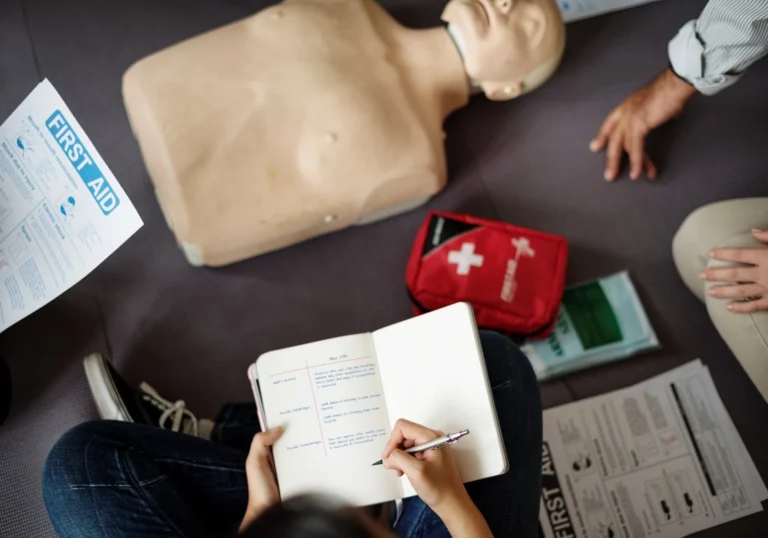
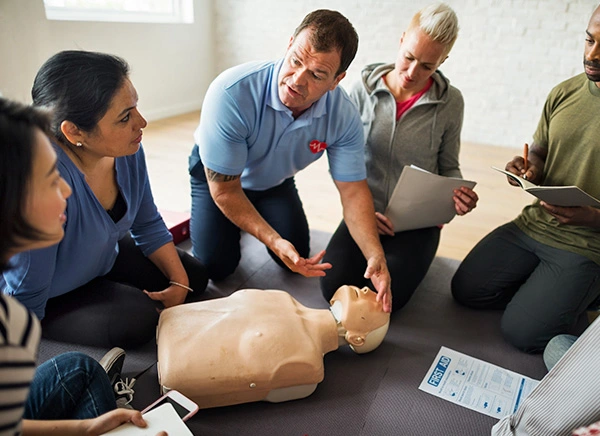
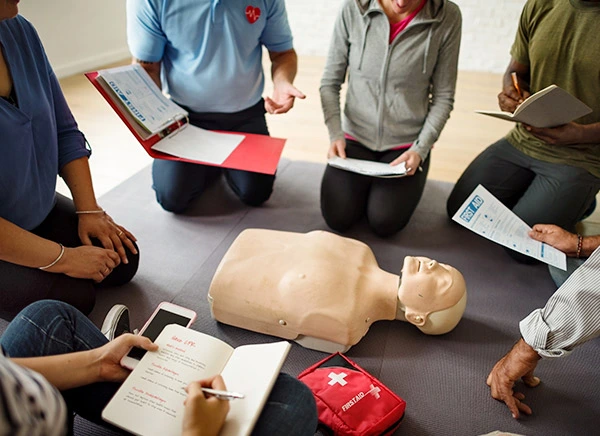
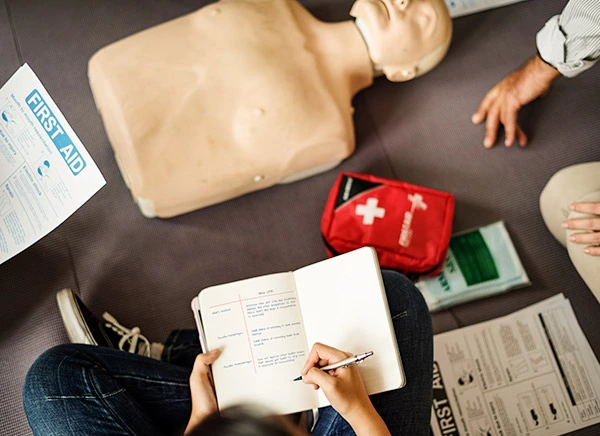
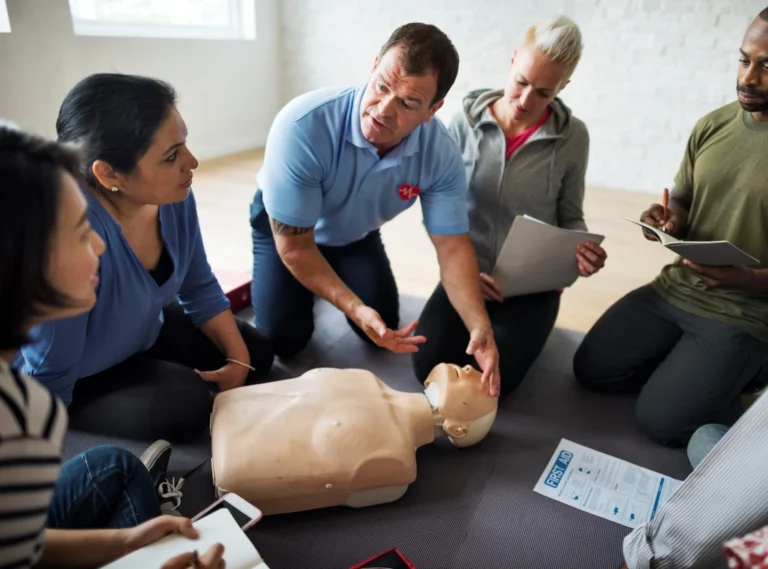
Reading the numbers is easy. Performing good compressions while kneeling beside a casualty is physical. Learners need to feel the depth, rhythm, recoil and fatigue. A manikin session also reveals mistakes that written instructions cannot see.
In a real cardiac arrest, the goal is not to recite guidance perfectly. The goal is to recognise the emergency, call for professional help and act.
Luton is in the middle of long term physical change. The town centre delivery plan supports a masterplan covering the next 20 to 30 years, with major investment planned across housing, business, public space, leisure and employment.
The council’s current strategy refers to a £5 billion investment pipeline, including around £1.7 billion associated with town centre regeneration and the Power Court stadium development. Construction activity connected with growth on this scale brings another local reason to take First Aid planning seriously.
HSE uses construction as an example of a higher hazard workplace in its First Aid guidance. That does not automatically prescribe one course for every site, but it changes the questions the employer should ask.
HSE updated its L74 guidance in 2024 to give greater attention to life threatening bleeding. Construction is one of the sectors specifically mentioned where additional training may be appropriate if the assessment identifies the risk.
That additional competence can include haemostatic dressings, wound packing or tourniquets where justified. Specialist equipment is only useful when suitable people understand when and how to use it.
A construction site can change dramatically between phases. Temporary gates move, plant arrives, routes close and teams spread across different work zones. Emergency access should therefore be reviewed as the project changes rather than copied from the first site plan.
Large projects often involve several contractors. HSE guidance allows employers occupying the same premises to make joint First Aid arrangements, but those arrangements should be clear and appropriate. Written agreement is sensible where responsibilities are shared.
The local economy is not only aviation and construction. The town centre regeneration programme is deliberately widening the centre beyond traditional retail into business, leisure, culture, community activity and health.
That creates workplaces where employees regularly interact with members of the public. A restaurant may worry about choking and burns. A shop may deal with collapse, falls or sudden illness. A leisure venue may have a completely different pattern again.
The First Aid Regulations impose the employer’s duty in relation to employees. HSE nevertheless strongly recommends considering visitors, contractors and members of the public when deciding what First Aid provision is appropriate.
In a busy public facing business, this can influence equipment location, the number of trained people, how staff summon assistance and how clearly emergency access is maintained.
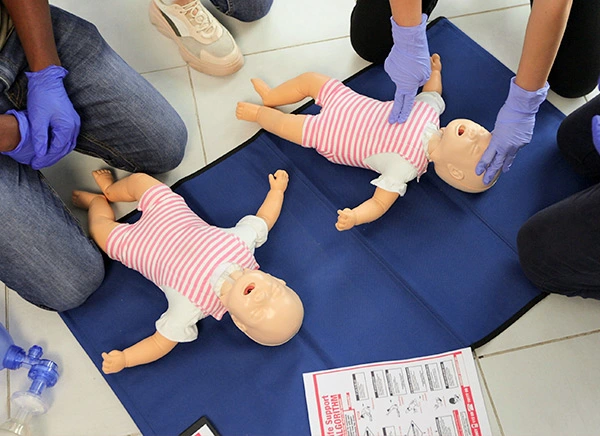
First Aid for babies and young children is a separate discipline. Their physiology, likely emergencies and practical techniques differ from adult workplace First Aid.
In England, registered early years settings must follow the current Early Years Foundation Stage framework. The versions in force from 1 September 2026 continue to require suitable paediatric First Aid provision.
The EYFS criteria specify a minimum of 6 hours face to face for emergency paediatric First Aid. The full paediatric First Aid course should last at least 12 hours excluding breaks, with the emergency elements delivered face to face.
The certificate must be renewed every three years. Registered settings should always match the course and delivery format to the statutory requirements that apply to the role and provider type.
View the Paediatric First Aid Course
CPTS lists a Luton training location at 72 Crawley Green Road, Luton, LU1 0QU on its local Luton page. The main First Aid course information also states that First Aid training is delivered at the Northamptonshire training centre, at venues around the country and on site for suitable teams.
Because different First Aid courses may run at different venues, confirm the location before travelling. When you contact us, tell us that you need First Aid training for Luton and ask which venue and date apply to the course you want.
For employers, on site training can be particularly useful where several employees need the same qualification. It can reduce repeated travel, simplify rota planning and allow a team to train together.
View the CPTS Luton training location
A good course should leave you with more than a list of topics. You should understand how to move from confusion to action.
EFAW concentrates on emergency workplace response. FAW goes wider. Paediatric First Aid changes the age group and emergency scenarios. AED training gives cardiac arrest response greater focus. Appointed Person training is about organising provision rather than becoming a workplace first aider.
This is why choosing the correct course matters more than collecting the largest possible certificate. The qualification should match the responsibility the learner is expected to carry afterwards.
There is one phrase worth treating with caution. HSE approved First Aid provider. HSE stopped approving individual workplace First Aid training providers and qualifications in 2013.
The employer is responsible for choosing a competent provider. HSE publishes due diligence guidance covering trainer competence, course content, quality assurance, assessment and the standards used for current First Aid practice.
Before booking, look for evidence of the following.
The town’s employment mix makes the answer unusually broad. First Aid training can be relevant to people working in aviation, logistics, construction, retail, hospitality, childcare, education, offices, engineering and community organisations.
Booking one person is easy. Booking a department that works early shifts, late shifts, weekends or different locations can become frustrating very quickly.
Start by deciding how many trained people the needs assessment says you require at any one time. Then work backwards through annual leave, sickness, training days and shift overlap.
Do not train exactly the minimum number of people and assume everybody will always be available. The arrangement has to survive real life.
For organisations with several learners, ask about private or on site delivery. It may be easier to train colleagues together, particularly when they share the same environment and emergency arrangements.
Organising First Aid training for a Luton airport contractor, warehouse, construction business, office, retailer, nursery or hospitality team? Call 01234 604 151 or email office@cpts.uk. Tell us how many people need training and what they do, and we can discuss suitable course and delivery options.
If you are planning training for more than one role, these pages can help you compare the wider options available through CPTS.
Below you will find practical answers to questions that commonly come up when individuals and employers compare First Aid training in Luton.
Yes. Employers in Great Britain must provide adequate and appropriate First Aid equipment, facilities and personnel so employees can receive immediate attention if they are injured or become ill at work. The exact arrangements depend on the First Aid needs assessment.
No. HSE does not apply one fixed rule to every workplace. A lower risk workplace with a small number of employees may only need an appointed person, while another workplace may need EFAW or FAW trained first aiders. The employer must decide from the needs assessment.
EFAW focuses on immediate emergency First Aid when someone is injured or becomes ill at work. FAW includes the EFAW content and extends the training to a wider range of injuries and illnesses. The broader FAW course can suit workplaces where the assessment identifies higher hazards or wider First Aid needs.
There is no universal number. The employer should consider the hazards, workforce size, shift pattern, separate work areas, absence and the time it would take a trained person to reach a casualty. A business may need more trained people simply to maintain realistic cover across shifts.
HSE uses construction as an example of a higher hazard workplace in its general First Aid guidance. The employer still has to assess the specific site, workforce and foreseeable injuries before deciding what training and how many first aiders are appropriate.
Not automatically. HSE says employers should consider additional training where the needs assessment identifies life threatening bleeding as a foreseeable risk. Construction is one sector specifically mentioned in this context.
Workplace FAW and EFAW certificates are valid for three years. Employers should plan requalification before expiry so the workplace does not lose the First Aid cover identified as necessary.
HSE strongly recommends annual refresher training during the three year certification period. It is a recommendation rather than a statutory requirement, but it helps maintain practical skills that may otherwise be used very rarely.
Not every qualification can be completed as online theory alone. HSE accepts blended learning where it is appropriate, but practical skills need suitable face to face teaching and assessment when the course requires them.
CPTS states that on site First Aid training is available for suitable groups and courses. Contact the team with the number of learners, your location and the course you are considering so the available delivery options can be confirmed.
CPTS lists a Luton training location at 72 Crawley Green Road, Luton, LU1 0QU. First Aid courses may run at different venues, so confirm the location and date for the specific First Aid course before travelling.
Registered early years providers in England must follow the current EYFS framework. The framework includes specific paediatric First Aid requirements, including course duration, face to face emergency elements and three year certificate renewal.
Resuscitation Council UK states that anyone can use an Automated External Defibrillator. The device gives prompts to the rescuer. Training remains useful because it helps people recognise cardiac arrest, retrieve the AED and act without unnecessary hesitation.
No. HSE stopped approving individual First Aid training providers and qualifications in 2013. Employers are responsible for selecting a competent provider and should consider trainer competence, quality assurance, course content and practical assessment.
The price depends on the course, duration, number of learners and delivery arrangement. A one day EFAW course, a three day FAW course and private group training are different products. Contact CPTS for current dates and pricing.
Luton is growing, changing and employing more people. Its workplaces range from airport operations and logistics to construction, shops, restaurants, nurseries and offices. First Aid training should reflect that reality.
Do not choose a course simply because the title sounds familiar. Think about the emergency your people may actually have to manage, the environment around them and whether the trained person will really be available when something happens.
Ready to arrange First Aid training in Luton? Call CPTS on 01234 604 151 or email office@cpts.uk to ask about current course dates, Luton availability, group bookings and the most suitable First Aid route for your requirements.
We appreciate your message and will respond as soon as possible.