
For Companies: pay only 30% with CITB Employer Network Funding
Enquire nowA medical emergency gives you very little time to think. Someone collapses in a shop, a colleague suffers a serious cut at work, a child starts choking, or a worker becomes unresponsive on a construction site. In those first few minutes, confidence matters. More importantly, correct action matters.
Our First Aid courses for Rushden are designed for people who want practical skills they can actually use. We train individuals, workplace first aiders, supervisors, managers, childcare professionals, parents and teams that need a sensible approach to emergency response rather than a certificate that simply disappears into a folder.
Rushden has a varied working environment. The town centre combines independent businesses with familiar high street names, while Rushden Lakes brings together retail, restaurants and leisure activity beside the Nene Valley. Add offices, schools, childcare settings, construction work and mobile teams, and it becomes obvious that one First Aid course will not suit everyone.
The right course depends on the risks you actually face. That is why we start with the purpose of the training, the type of workplace and the responsibilities the learner may have after the course.
Need First Aid training in Rushden for yourself or your team? Call CPTS on 01234 604 151 or contact us to discuss the right course, available dates and group training options.
Rushden is not a one industry town. That matters when you choose First Aid training. A small office, a busy retail unit, a restaurant, a nursery and a construction site can all present completely different emergency scenarios.
The Health and Safety Executive requires employers in Great Britain to provide adequate and appropriate First Aid arrangements. It does not give every business the same fixed number of first aiders. Instead, employers should carry out a First Aid needs assessment and use the findings to decide what people, equipment and facilities are required.
This is where many businesses make a simple mistake. They choose a course because the title sounds right, rather than because it matches the workplace. We prefer the opposite approach. Look at the work first, then choose the training.
The course names can look frustratingly similar when you are booking for the first time. Emergency First Aid at Work, First Aid at Work, annual refresher training, requalification, AED training and paediatric First Aid all serve different purposes. Here is a practical way to separate them.
Emergency First Aid at Work, usually shortened to EFAW, focuses on immediate response when somebody is injured or suddenly becomes ill at work. HSE describes EFAW as training that enables a first aider to give emergency First Aid to someone who becomes injured or ill while working.
It can suit workplaces where the First Aid needs assessment identifies a more limited level of workplace First Aid competence. During training, learners typically develop practical emergency response skills such as casualty assessment, CPR, AED use, choking response, bleeding control, shock management and care of an unresponsive casualty.
See the Emergency First Aid at Work course
First Aid at Work, known as FAW, goes further. HSE states that FAW includes the EFAW syllabus and also prepares the learner to respond to a wider range of specific injuries and illnesses.
This broader course can be appropriate where the needs assessment identifies higher hazards or where the workplace requires a wider level of First Aid competence. Construction, warehousing and work involving dangerous machinery are examples of environments HSE uses when discussing higher hazard workplaces.
Learners may deal with scenarios involving major bleeding, burns, fractures, eye injuries, shock and serious illness as well as CPR, AED use and the management of an unresponsive casualty.
See the First Aid at Work course
Most first aiders are grateful that they rarely need to perform CPR or manage a major bleed in real life. Unfortunately, that also means practical skills can fade. HSE strongly recommends annual refresher training during the three year FAW or EFAW certification period.
Annual refresher training is recommended rather than legally mandatory. It gives existing first aiders the chance to practise again, correct small errors and keep emergency procedures familiar.
See the First Aid Refresher Course
Workplace First Aid certificates used for FAW and EFAW purposes are valid for three years. HSE says employers should arrange retraining before certificates expire. A First Aid at Work requalification course is intended to refresh the full competence of an existing FAW first aider and renew certification.
Do not leave this until the final week. If a certificate expires, the person is no longer considered competent to act as a workplace first aider for the purposes of the regulations until they requalify appropriately.
See First Aid at Work Requalification
Cardiac arrest is one of those situations people hope they will never witness. If it happens, hesitation is frighteningly easy. Practical AED and CPR training is designed to make the sequence of actions much more familiar.
Current Resuscitation Council UK adult basic life support guidance recommends chest compressions at a rate of 100 to 120 per minute and a depth of at least 5 cm but no more than 6 cm for an adult. An AED should be used as soon as it is available, following the device prompts.
Adults and children are not simply smaller versions of the same casualty. Anyone who regularly works with babies or young children needs training that reflects paediatric emergencies, including infant and child CPR, choking, anaphylaxis, seizures and other situations relevant to childcare.
In England, registered early years providers must follow the current Early Years Foundation Stage framework. The framework includes specific requirements for paediatric First Aid and for the people who must be available when children are present.
See the Paediatric First Aid course
An appointed person is not the same as a trained first aider. HSE allows employers to appoint someone to take charge of First Aid arrangements where the needs assessment shows that a trained first aider is not required. The role includes looking after First Aid equipment and facilities and calling the emergency services when necessary.
An appointed person should never be presented as a substitute for a first aider where the assessment identifies that trained First Aid personnel are required. The two roles have different responsibilities.
See First Aid Appointed Person Training
Not sure whether EFAW or FAW is right for your Rushden workplace? Tell us what your team does, how many people you employ and the type of risks present. We can talk you through the available training without making you guess from course names.
Construction changes quickly. A site that looks relatively straightforward this week can include excavations, lifting operations, moving plant, cutting equipment, temporary access routes or work at height the next. That is precisely why First Aid planning on construction sites deserves more thought than simply putting a box in the site office.
HSE includes construction among the examples of higher hazard workplaces. The appropriate provision still depends on the needs assessment, but the potential consequences of crushing injuries, severe bleeding, burns, fractures and falls mean that employers should look carefully at the level of training their first aiders need.
Updated HSE guidance recognises situations where additional training in the management of life threatening bleeding may be appropriate. Construction is one of the sectors specifically mentioned in this context.
Where the needs assessment identifies the risk, extra training can include the use of haemostatic dressings, wound packing or tourniquets. Simply buying this equipment is not enough. People need to know when it is appropriate, how to use it and how it fits into the wider emergency plan.
Think beyond the moment somebody calls 999. Can the emergency crew find the entrance quickly? Can they reach the casualty once inside? Are gates locked? Is the injured worker several floors up, in a remote compound or behind temporary traffic management?
A good First Aid plan follows the casualty all the way from the incident to professional medical care. For Rushden contractors and mobile teams, that means reviewing arrangements whenever the site, workforce or work activity changes.
Rushden developed from a town strongly associated with boot and shoe manufacturing into a much more varied modern local economy. The character of the town still shows that history, but today somebody can move in a few minutes from the traditional town centre to the large retail and leisure environment at Rushden Lakes.
That variety is useful when thinking about First Aid. It shows why headcount alone tells only part of the story.
Busy public areas create situations involving employees, customers and visitors. Although the First Aid Regulations focus on employees, HSE strongly recommends that employers consider non employees when planning First Aid provision.
Burns, cuts, slips, choking and sudden illness can create a different practical risk profile from a quiet office. The needs assessment should reflect the activities carried out on the premises.
Lower hazard does not mean no risk. Cardiac arrest, choking, seizures, falls and sudden illness can occur anywhere, so employers still need suitable arrangements.
Higher hazard activities can require broader competence, more first aiders, additional equipment or specialist training depending on the assessment.
Paediatric emergencies require different knowledge and, in registered early years settings in England, the EYFS framework creates specific First Aid requirements.
People working away from a fixed base may need personal equipment, reliable communication and arrangements that still work when colleagues are not nearby.
CPTS delivers First Aid training from its Northamptonshire training centre at Airfield Road, Wellingborough, NN29 7XA. The Airfield Road area sits in the wider Rushden and Wellingborough catchment, making the centre a practical option for learners travelling from Rushden and nearby communities.
The main First Aid course range also includes training at other venues and on site delivery for suitable group bookings. That can be particularly useful for employers who need to train several employees together and want to reduce the disruption caused by sending people away from the workplace on different days.
For group training, tell us where your Rushden team is based and how many people need the course. We can discuss the delivery options that are actually available for the course you need.
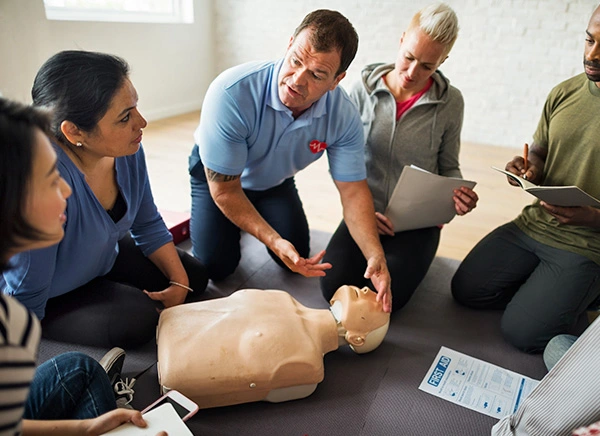
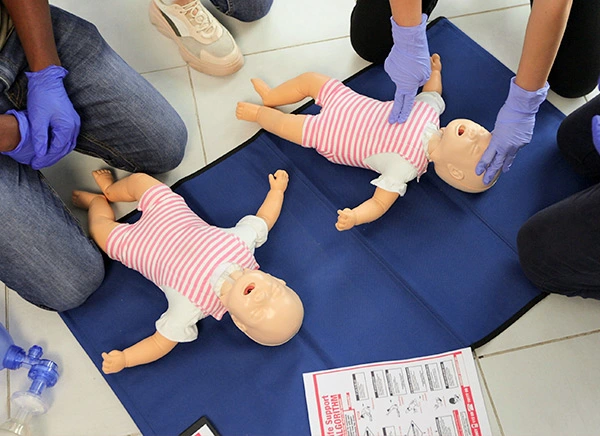
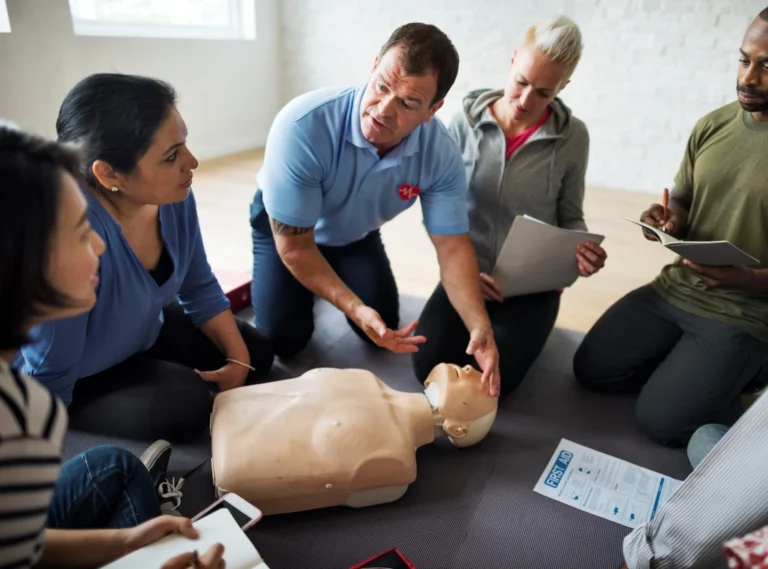
People remember First Aid more effectively when they have to do something, not just listen to somebody describe it. Practical scenarios also expose the uncomfortable little moments that are easy to ignore in theory. Where do you place your hands? How hard do you compress? What happens if the casualty is unresponsive but breathing? How do you control major bleeding while someone else is calling for an ambulance?
The exact syllabus depends on the course, but First Aid training can include the following areas.
There is a detail worth knowing before you compare training companies. HSE no longer approves individual First Aid training providers or First Aid qualifications. That approval requirement was removed in 2013.
So do not judge a course by an old fashioned claim that it is simply HSE approved. Employers are expected to select a competent training provider and carry out appropriate due diligence.
HSE guidance says employers should look for evidence that the provider can demonstrate suitable standards in areas such as the following.
This is especially important when you book training for employees rather than for personal interest. The certificate matters, but the real test is whether the learner can respond sensibly when the situation is noisy, stressful and nothing looks as tidy as it did in the training room.
Sending one employee on a course is straightforward. Training a whole shift, site team or department can be much more awkward. Rotas change. People work different hours. Production still has to continue. Somebody is always on annual leave.
For suitable courses and group sizes, on site training can make the organisation far easier. It may allow colleagues who normally work together to train together, discuss familiar workplace scenarios and reduce repeated travel.
On site delivery does not mean lowering the standard. Practical assessment, suitable equipment and the required course content still matter. The delivery format has to work for the qualification and the type of First Aid training being provided.
Planning First Aid training for a Rushden business, construction team, school, nursery or customer facing workplace? Call 01234 604 151 or email office@cpts.uk and tell us how many people you need to train. We can discuss course type, location and available group options.
HSE states that FAW and EFAW certificates used for workplace First Aid are valid for three years. Employers should arrange requalification before the certificate expires.
Once the certificate expires, the person is no longer considered competent to act as a workplace first aider for the purposes of the First Aid regulations. That can create a gap in the provision identified by the employer’s needs assessment.
HSE strongly recommends annual refresher training during the three year certificate period. That recommendation makes practical sense. CPR, casualty positioning and emergency decision making are not skills most people use every week.
You do not need to be a medic or work on a dangerous construction site to find First Aid useful. The right course depends on what you want to be able to do and what your workplace requires.
Many learners arrive worried that they will forget everything the moment an emergency happens. That concern is completely understandable. Practical training is useful precisely because it turns a list of instructions into actions you have already rehearsed.
If you are comparing different options, these course pages will help you narrow down the right route.
Still deciding which course is right for you or your team? These are the questions people most often need answered before they book First Aid training.
Employers in Great Britain must provide adequate and appropriate equipment, facilities and personnel so employees can receive immediate attention if they are injured or become ill at work. The exact provision should come from a First Aid needs assessment. This does not mean every workplace automatically needs the same number of qualified first aiders.
Emergency First Aid at Work prepares a first aider to give emergency First Aid when someone is injured or becomes ill at work. First Aid at Work includes the EFAW content and extends training to a wider range of specific injuries and illnesses. The employer’s needs assessment should guide the choice.
There is no single fixed ratio for every business. HSE says the number should reflect the First Aid needs assessment. Employers should consider hazards, workforce size, work patterns, separate work areas, absence, lone workers, previous incidents and the location of the workplace.
The employer must provide adequate and appropriate First Aid arrangements. Construction is treated by HSE as a higher hazard environment when giving general guidance, but the exact number of trained first aiders and the level of training still depend on the workplace assessment.
FAW and EFAW workplace First Aid certificates are valid for three years. Employers should arrange appropriate requalification before expiry so the workplace does not lose the level of First Aid cover identified in its needs assessment.
HSE strongly recommends annual refresher training during the three year FAW or EFAW certification period. It is a recommendation rather than a statutory requirement, but it helps first aiders maintain practical skills and stay familiar with current procedures.
Once a workplace First Aid certificate has expired, the person is no longer considered competent to act as a first aider for the purposes of the regulations. HSE allows requalification after expiry, although the employer should decide the most appropriate route and a full FAW course may be prudent after a longer gap.
Not every First Aid qualification is suitable for online only delivery because practical competence has to be taught and assessed appropriately. HSE accepts blended learning for workplace First Aid where suitable controls are in place, but enough face to face time must remain for practical teaching and assessment.
CPTS states that on site First Aid training can be arranged for teams for suitable courses. Contact the training team with the number of learners, the course you are considering and your Rushden location so the available delivery options can be discussed.
The Northamptonshire training centre is at Airfield Road, Wellingborough, NN29 7XA. It serves learners from Rushden and the wider local area as well as people travelling from elsewhere in the region.
Many entry level First Aid courses do not require previous First Aid experience. The important point is to choose a course that matches your role and, where the training is for work, the level identified by the employer’s First Aid needs assessment.
No. An appointed person manages First Aid arrangements such as equipment and contacting the emergency services. They are not automatically a trained first aider and should not replace trained personnel where the needs assessment shows that first aiders are required.
Registered early years providers in England must comply with the current EYFS framework, which contains specific Paediatric First Aid requirements. The correct course depends on the person’s role and the statutory requirements applying to the setting.
There is no general HSE rule requiring every workplace to have an AED. Employers can consider defibrillator provision as part of the First Aid needs assessment. Where an AED is available, practical familiarisation can help people act with more confidence during cardiac arrest.
No. HSE stopped approving First Aid training providers and qualifications in 2013. Employers are responsible for selecting a competent provider and should consider trainer competence, course content, quality assurance and practical assessment.
Prices depend on the course, duration, number of learners and delivery arrangement. A one day emergency course, a three day FAW course and private group training are different products, so contact CPTS for current course dates and pricing.
A certificate is useful. Knowing what to do when somebody genuinely needs help is far more important. Whether you are booking for yourself, renewing an existing workplace qualification or organising training for a Rushden team, start by choosing the course that matches the situation you may actually face.
If you are unsure which option fits, ask before you book. A short conversation about your workplace, workforce and responsibilities can prevent you from choosing a course that is too limited or unnecessarily broad.
Call CPTS on 01234 604 151 or email office@cpts.uk to ask about First Aid courses for Rushden, current availability, group training and the most suitable course for your requirements.
We appreciate your message and will respond as soon as possible.