

Fachowo prowadzone kursy pierwszej pomocy w Wielkiej Brytanii
Wiedza z zakresu pierwszej pomocy jest niezbędna dla każdego, niezależnie od tego, czy pracuje na budowie, w biurze czy w domu. Nasze kursy pierwszej pomocy obejmują szereg tematów, zaprojektowanych tak, aby zapewnić ci wiedzę potrzebną w nagłych wypadkach medycznych.
Od zaawansowanych do pierwsza pomoc pediatrycznamamy kurs, którego potrzebujesz, aby poszerzyć swoją wiedzę. Skontaktuj się z nami już dziś i dowiedz się więcej o naszych szkoleniach z pierwszej pomocy w Wielkiej Brytanii.
Zdobądź certyfikat pierwszej pomocy w ratowaniu życia
Współpracownik zemdlał w biurze. Ręka współpracownika zostaje zmiażdżona przez maszynę. Osoba postronna nagle upada, chwytając się za klatkę piersiową. Co byś zrobił?
Dzięki naszym kursom pierwszej pomocy uzyskasz odpowiedzi. Nauczysz się wszystkiego, od bandażowania ran po resuscytację krążeniowo-oddechową, zdobywając umiejętności działania w oczekiwaniu na profesjonalną pomoc.
Pod koniec szkolenia z pierwszej pomocy otrzymasz certyfikat pierwszej pomocy - dowód, że posiadasz wiedzę potrzebną do ratowania życia.
Kursy pierwszej pomocy: Niezbędne szkolenie
Szkolenie z pierwszej pomocy jest najważniejszym szkoleniem, jakie kiedykolwiek odbędziesz. Obecność osoby udzielającej pierwszej pomocy na miejscu zdarzenia może stanowić różnicę między życiem a śmiercią. Oto kilka powodów, dla których warto rozważyć jeden z naszych certyfikowanych kursów pierwszej pomocy:
- Save Lives: Czy jest coś ważniejszego niż ratowanie życia? Nasze szkolenia w Wielkiej Brytanii pozwalają odmienić sytuację kryzysową.
- Zgodność z prawem: W wielu miejscach pracy pracownicy muszą posiadać kwalifikacje w zakresie pierwszej pomocy, aby zachować zgodność z prawem. Nieprzestrzeganie przepisów grozi zarówno utratą życia, jak i wysokimi grzywnami.
- Rozwój umiejętności: Szkolenia z pierwszej pomocy oferują znaczący rozwój osobisty, pomagając w budowaniu pewności siebie i podejmowaniu większej odpowiedzialności w miejscu pracy.
Nasze kursy pierwszej pomocy
Spójrz poniżej, aby zobaczyć różnorodność dostępnych kursów pierwszej pomocy. Wszystkie nasze szkolenia prowadzone są przez ekspertów w swoich dziedzinach.
Odbywają się one w naszym nowoczesnym centrum szkoleniowym oraz w miejscach na terenie całego kraju. Oferujemy również szkolenia z pierwszej pomocy na miejscu - skontaktuj się z nami, aby dowiedzieć się więcej.


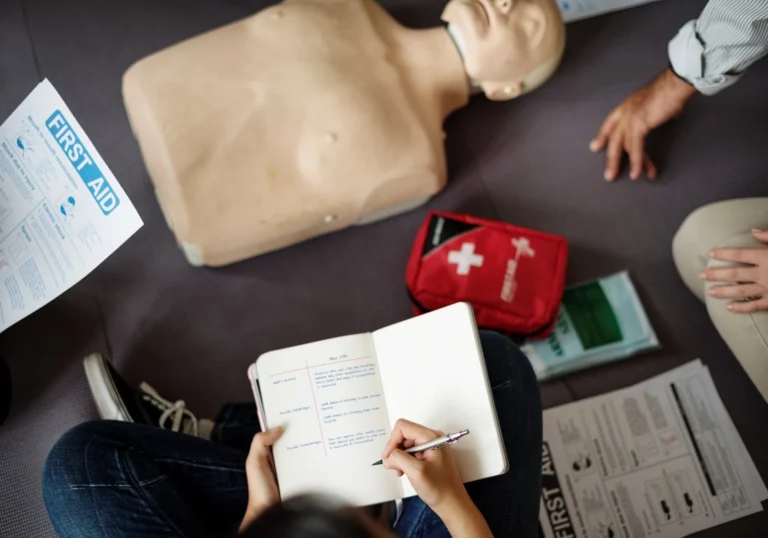

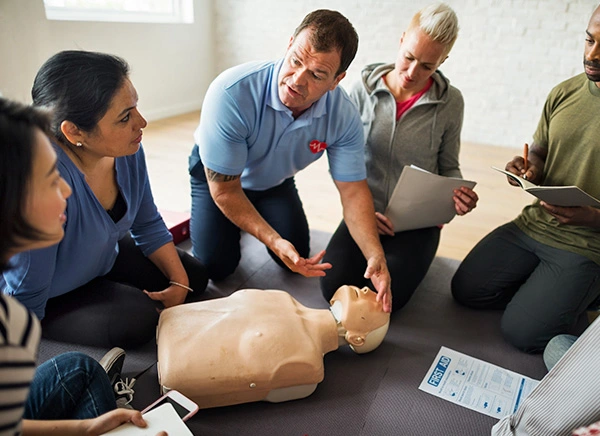

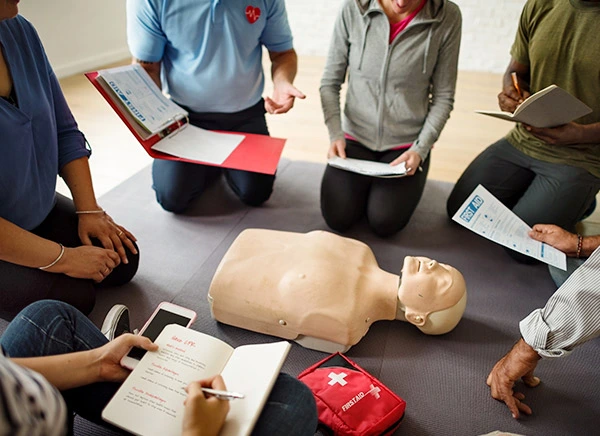
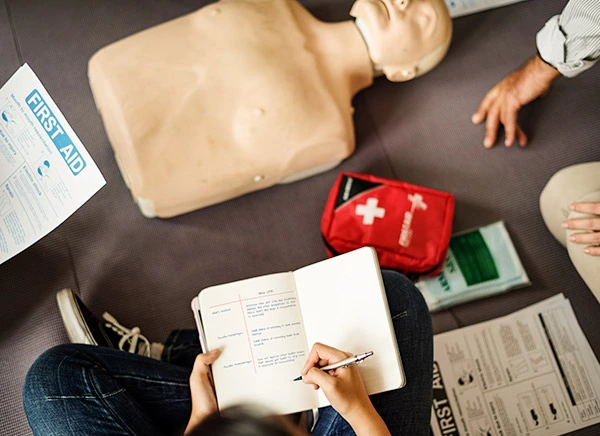



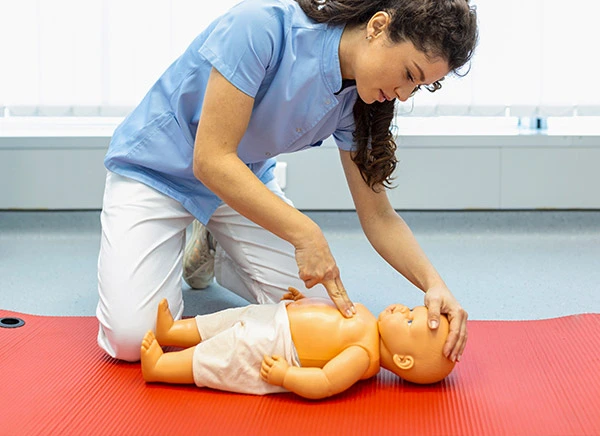
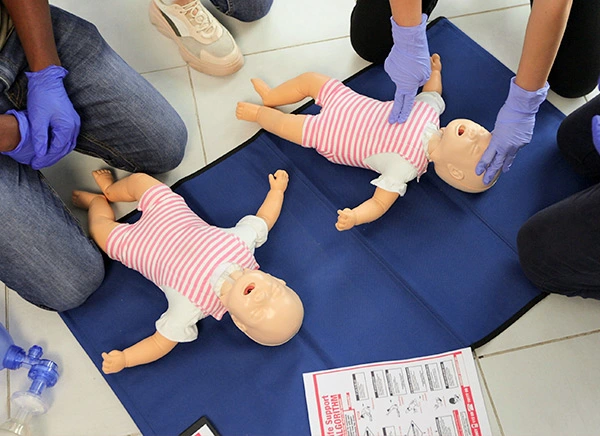


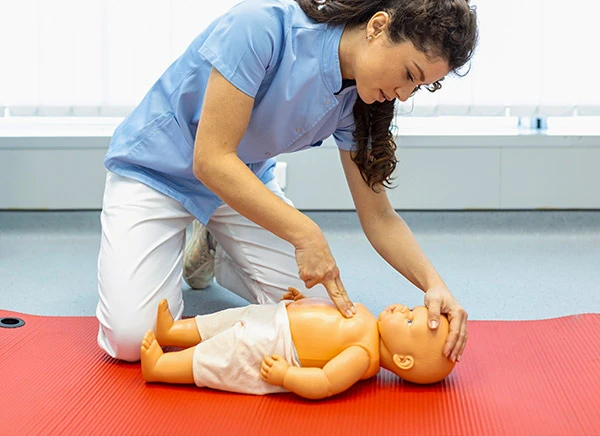
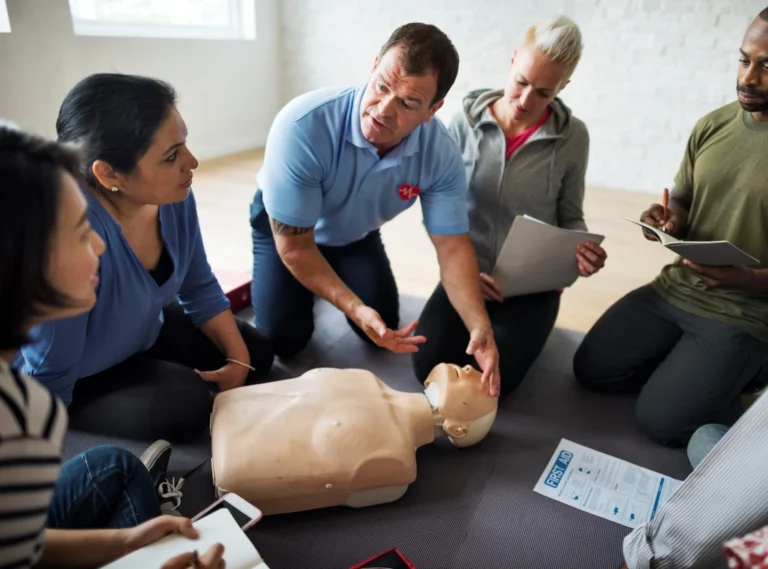


Kursy - porównanie
Przegląd czasu trwania, odbiorców, kluczowych tematów, ważności certyfikatów i formatów dostarczania.
| Kurs | Czas trwania | Dla kogo | Kluczowa zawartość | Certyfikat | Format |
|---|---|---|---|---|---|
| KursPierwsza pomoc w miejscu pracy (FAW) | Czas trwania3 dni | Dla kogoPrzełożeni, kierownicy budowy/magazynu; miejsca pracy o podwyższonym ryzyku | Kluczowa zawartość
|
CertyfikatWażność 3 lata | FormatSala lekcyjna |
| KursPierwsza pomoc w nagłych wypadkach w miejscu pracy (EFAW) | Czas trwania1 dzień | Dla kogoMiejsca pracy niskiego i średniego ryzyka | Kluczowa zawartość
|
CertyfikatZazwyczaj 3 lata | FormatClassroom / Blended |
| KursWymagana kwalifikacja w zakresie pierwszej pomocy w miejscu pracy | Czas trwania2 dni | Dla kogoPosiadacze nieaktualnych (lub niedawno wygasłych) FAW | Kluczowa zawartość
|
CertyfikatWażność 3 lata | FormatSala lekcyjna |
| KursUmiejętności roczne (odświeżające) | Czas trwania1 dzień | Dla kogoObecni ratownicy; coroczna aktualizacja umiejętności | Kluczowa zawartość
|
CertyfikatSzkolenie odświeżające (coroczne) | FormatClassroom / Blended |
| KursKurs pierwszej pomocy dla osób wyznaczonych | Czas trwaniaPół dnia | Dla kogoMiejsca pracy o niskim stopniu zagrożenia; wyznaczone osoby | Kluczowa zawartość
|
CertyfikatCertyfikat dostawcy | FormatSala lekcyjna / transmisja na żywo online |
| KursSzkolenie z pierwszej pomocy pediatrycznej | Czas trwania6 godzin (podstawowy) lub 12 godzin | Dla kogoPersonel żłobka, opiekunowie do dzieci, rodzice | Kluczowa zawartość
|
CertyfikatWażny 3 lata (Ofsted/EYFS) | FormatClassroom / Blended |
| KursKurs pediatryczny (2 dni w ciągu 2 tygodni) | Czas trwania2 nieprzerwane dni (≤14 dni) | Dla kogoRole zgodne z EYFS/Ofsted; napięte harmonogramy | Kluczowa zawartość
|
CertyfikatWażność 3 lata | FormatSala lekcyjna / transmisja na żywo online |
| KursMieszana pierwsza pomoc pediatryczna | Czas trwaniaSelf-paced online + 1 dzień F2F | Dla kogoPersonel opieki nad dziećmi wymagający zaliczenia 12 godzin | Kluczowa zawartość
|
CertyfikatWażny 3 lata (EYFS) | FormatMieszany |
| KursSzkolenie z pierwszej pomocy dla niemowląt i dzieci (dzień) | Czas trwania1 dzień (09:30-16:30) | Dla kogoRodzice, opiekunowie, opiekunki do dzieci | Kluczowa zawartość
|
CertyfikatWażność 3 lata | FormatClassroom / Blended |
| KursPierwsza pomoc dla niemowląt i dzieci (wieczory) | Czas trwaniaJeden wieczór (~2,5-3 godz.) | Dla kogoRodzice/opiekunowie potrzebujący krótkiej sesji | Kluczowa zawartość
|
CertyfikatCertyfikat dostawcy | FormatWieczór (osobiście) |
| KursSzkolenie AED (defibrylator i resuscytacja krążeniowo-oddechowa) | Czas trwania~2,5 godz. | Dla kogoKażdy (16+), w tym miejsca pracy, szkoły, siłownie | Kluczowa zawartość
|
CertyfikatZazwyczaj 3 lata | FormatOsobiście / na żywo online |
| KursSzkolenie dla straży pożarnej | Czas trwaniaPół dnia (~4 godz.) | Dla kogoWyznaczeni strażnicy pożarni | Kluczowa zawartość
|
CertyfikatCertyfikat dostawcy | FormatOsobiście |
Nasze kursy pierwszej pomocy w porównaniu
Zastanawiasz się, który z naszych kursów pierwszej pomocy wybrać? Sprawdź poniżej, jak wypadają poszczególne kursy.
Czego się nauczysz?
Wszystkie nasze kursy różnią się od siebie. Jednak niektóre z umiejętności, których możesz się nauczyć podczas nauki z nami, obejmują:
- RESUSCYTACJA KRĄŻENIOWO-ODDECHOWA: Dowiedz się, jak ratować życie w najbardziej stresujących sytuacjach, ucząc się resuscytacji krążeniowo-oddechowej i innych umiejętności ratujących życie.
- Podstawy wypadków: Zapewnienie leczenia typowych urazów, takich jak oparzenia, skręcenia i skaleczenia.
- Zdrowie psychiczne: Rozpoznaj osoby z objawami problemów ze zdrowiem psychicznym i dowiedz się, jak zaoferować im wsparcie, którego potrzebują.
- Aktualne informacje: Techniki i teorie pierwszej pomocy stale ewoluują. Bądź na bieżąco dzięki naszym regularnym kursom odświeżającym wiedzę z zakresu pierwszej pomocy.
Oferujemy również kursy pierwszej pomocy, które koncentrują się na konkretnych obszarach, takich jak kursy pierwszej pomocy w pracy i dla wyznaczonych osób. Nie jesteś pewien, który kurs jest dla Ciebie najlepszy? Skontaktuj się z nami już dziś, a my przedstawimy Ci dostępne opcje.

Bądź przygotowany dzięki certyfikowanemu szkoleniu z pierwszej pomocy
Jesteśmy czołowym dostawcą szkoleń z pierwszej pomocy, z doświadczeniem potrzebnym do zapewnienia wysokiej jakości szkoleń dla różnych uczestników.
Niezależnie od powodów, dla których chcesz nauczyć się pierwszej pomocy, jesteśmy tutaj, aby poprowadzić Cię przez ten proces, zapewniając wiedzę potrzebną do ratowania życia w nagłych wypadkach.
Aby dowiedzieć się więcej o naszych kursach pierwszej pomocy, zadzwoń do nas już dziś pod numer 01234 604 151 lub napisz do nas na adres office@cpts.uk. Czekamy na wiadomość od Ciebie.
Wybierz nasze kursy pierwszej pomocy w pobliżu!
Jeśli nie znalazłeś szkolenia z pierwszej pomocy, którego szukasz, skontaktuj się z nami. Z przyjemnością pomożemy
Znajdź kursy pierwszej pomocy w pobliżu w Wielkiej Brytanii - szczegóły:
Which First Aid course does your workplace actually need?
Choosing First Aid training is not simply a matter of picking the shortest course or sending one person from the team on a convenient date. A small office, a busy warehouse and an active construction site may have completely different first aid requirements. The sensible starting point is therefore the workplace itself.
For employers in Great Britain, the Health and Safety Executive expects first aid provision to be adequate and appropriate for the circumstances identified through a first aid needs assessment. That assessment should influence the number of people you train, the type of course they complete, the equipment you provide and where that equipment is located.
That makes a practical difference. Five workers carrying out higher hazard construction activities can present a very different first aid challenge from five people working at desks. Headcount matters, but it is only part of the picture.
Start with a First Aid needs assessment
What could realistically happen at your workplace? How quickly could somebody reach an injured person? Would the same arrangements work at 7am, during a night shift and when the usual first aider is on holiday? These questions are far more useful than choosing a qualification by name alone.
A good first aid needs assessment should consider the real working environment rather than an ideal version of it. HSE guidance tells employers to look beyond employee numbers and consider hazards, accident history, working patterns, the physical layout of the premises and access to professional emergency help.
- Consider the hazards and risks created by the work itself. Machinery, sharp equipment, work at height, vehicles, electricity, hazardous substances and other activities can change the injuries a first aider may need to manage.
- Look at how many people are actually present during each working period. A daytime headcount tells you very little if part of your operation also runs evenings, nights or weekends.
- Review previous accidents, incidents and patterns of ill health. What has already happened can reveal whether your existing provision matches the problems people genuinely face.
- Take account of lone, mobile and remote workers. A first aid box in the main office will not solve much when somebody is working alone elsewhere.
- Think about distance and access to emergency medical services. Large sites, remote projects and difficult access routes can all affect the response plan.
- Include planned and unexpected absence. Annual leave, sickness and changing shifts should not leave the workplace without the provision identified as necessary.
- Consider visitors, contractors and members of the public. HSE strongly recommends including non employees when assessing first aid arrangements even though the First Aid Regulations do not impose the same duty towards them.
- Consider employees with particular physical or mental health needs. HSE guidance now expressly reminds employers to include mental health when reviewing first aid needs.
One important distinction. A risk assessment is used to identify and control workplace health and safety risks. A first aid needs assessment then asks what provision will be required if somebody is injured or becomes ill despite those controls.
How many First Aiders might a workplace need?
There is no single statutory ratio that works for every business. HSE nevertheless provides a useful decision framework in Appendix 3 of its First Aid at Work guidance. It separates lower hazard and higher hazard workplaces and then considers employee numbers.
| Workplace profile | People employed | HSE suggested starting point |
|---|---|---|
| Lower hazard Examples include offices, shops and libraries |
Fewer than 25 | At least one appointed person |
| Lower hazard | 25 to 50 | At least one EFAW trained first aider |
| Lower hazard | More than 50 | At least one FAW trained first aider for every 100 employees or part thereof |
| Higher hazard HSE examples include construction, warehousing and extensive work with dangerous machinery or sharp instruments |
Fewer than 5 | At least one appointed person |
| Higher hazard | 5 to 50 | At least one EFAW or FAW trained first aider depending on the type of injuries that may occur |
| Higher hazard | More than 50 | At least one FAW trained first aider for every 50 employees or part thereof |
These figures are guidance rather than automatic legal minimums for every workplace. Your assessment may identify the need for more first aiders, additional equipment or additional training. Shift patterns, multiple floors, large compounds, remote work and first aider absence can all alter the answer.
Not sure whether your team needs EFAW, FAW or something more specific?
Tell us about your workplace, the work your employees carry out and the number of people you need to train. We can discuss the available First Aid courses and help you identify the most appropriate training option for your requirements.
First Aid on a construction site needs a closer look
A construction site changes from week to week. Excavations appear and disappear. Plant arrives. Subcontractors move in. Access routes change. One phase may involve relatively straightforward groundworks while another introduces lifting operations, confined spaces or extensive work at height.
This is exactly why a construction business should not treat First Aid provision as a document that gets completed once and forgotten. Review it when the workforce, activities, layout or foreseeable injuries change.
Life threatening bleeding
HSE specifically identifies construction as one of the sectors where a needs assessment may indicate additional training in the management of life threatening bleeding. This can include haemostatic dressings, wound packing or tourniquets where the identified risks justify it.
Changing access
An ambulance reaching the site entrance is not the same thing as reaching the casualty. Consider gates, temporary routes, tower levels, compounds and restricted areas when planning how professional help will reach somebody quickly.
Multiple work areas
A large development can make one central first aid point impractical. HSE recommends considering provision in separate buildings, floors or work areas where the premises are spread out.
Shift and absence cover
The arrangement has to work whenever people are at work. Do not build the entire plan around one trained person who may be on another project, on leave or unavailable when an incident occurs.
Several employers on one site
Construction projects frequently involve more than one employer. HSE recommends arrangements between site occupiers so adequate provision is maintained and strongly recommends documenting shared arrangements in writing.
Remote and lone work
People who travel, work alone or work away from the main site may need different arrangements. Personal First Aid kits and reliable communication can form part of the response where the needs assessment identifies that requirement.
Extra equipment only makes sense when people know how and when to use it. Specialist items identified by a site assessment should be supported by suitable training and incorporated into the emergency arrangements rather than simply placed in a First Aid kit.
What should modern First Aid training reflect in 2026?
First Aid is practical training. Somebody may understand a presentation perfectly and still struggle when the situation suddenly becomes real. This is why current standards, practical assessment and repeated practice matter.
The Health and Safety Executive states that FAW and EFAW training should follow currently accepted first aid practice, including current guidance from the Resuscitation Council UK. The organisation published its latest UK resuscitation guidelines in 2025.
CPR practice has measurable standards
Current Resuscitation Council UK adult basic life support guidance recommends chest compressions at 100 to 120 per minute and a depth of at least 5 cm but no more than 6 cm for adults.
If a person is unresponsive with abnormal breathing, the guidance says to presume cardiac arrest and start the emergency response without unnecessary delay.
An AED is designed to be used when it is needed
Resuscitation Council UK states that anyone can use an Automated External Defibrillator. Training remains valuable because practice helps people recognise the situation, retrieve the device and act with less hesitation.
In a real emergency, follow the instructions from the emergency call handler and the prompts given by the AED.
For an employer, the practical question is therefore not merely whether a course has the right title. Ask whether learners actually demonstrate competence, whether practical elements are directly assessed and whether teaching follows current accepted UK first aid practice.
How can you check a First Aid training provider?
There is an important detail that is surprisingly easy to miss. HSE no longer approves individual First Aid training providers or First Aid qualifications in Great Britain. The approval requirement was removed in 2013. Employers therefore have responsibility for selecting a competent provider and, where necessary, carrying out appropriate due diligence.
So what should you look for before booking?
- The trainers and assessors should be appropriately qualified and competent.
- The organisation should have suitable quality assurance arrangements.
- The syllabus should meet the required content and duration for the qualification being delivered.
- FAW and EFAW content should follow currently accepted First Aid practice.
- Practical competence should be properly assessed. HSE strongly recommends direct observation of practical elements.
- Blended learning needs proper controls. HSE accepts a mix of elearning and face to face training for workplace First Aid where appropriate, but sufficient classroom time and practical assessment still have to be provided.
- The certificate should contain the information expected for the qualification. For FAW and EFAW this includes the candidate, training organisation, qualification, commencement date and three year validity.
This is a much better way to assess training than looking for an outdated statement that a provider is simply “HSE approved”.
Need First Aid training for several employees?
Training requirements often become easier to organise when you look at the whole team rather than individual bookings. Tell us how many people need training, where they work and what type of workplace you operate. We can discuss suitable course options, available dates and group training arrangements.
What happens when a First Aid certificate is getting older?
Passing a course is not the end of the story. Skills such as CPR are rarely used during an ordinary working day, which is exactly why they can become less familiar over time.
After qualification
FAW and EFAW certificates used for workplace First Aid are normally valid for three years. Employers should keep track of certification dates so expiry does not create an unexpected gap in cover.
During the three year period
HSE strongly recommends annual refresher training for qualified First Aiders. It is a recommendation rather than a mandatory requirement, but it helps people maintain basic practical skills and keep up with changes in procedure.
Before the certificate expires
Plan requalification before the expiry date rather than waiting until the workplace is left without the trained personnel identified by the needs assessment.
If an FAW certificate has already expired
HSE guidance allows FAW requalification after expiry, but says that when a considerable period has elapsed, with more than one month given as an example, it may be prudent to complete the full FAW course again. The employer is responsible for deciding what is appropriate in the circumstances.
Existing First Aiders can find further details about our First Aid Refresher Course oraz First Aid at Work Requalification course.
Paediatric First Aid and the current EYFS requirements
Paediatric First Aid needs to be considered separately from ordinary workplace First Aid. This is particularly important for nurseries, early years settings, childminders and schools because the statutory Early Years Foundation Stage framework sets specific requirements in England.
The current EYFS frameworks took effect on 1 September 2026. For group and school based early years providers, at least one person holding a current certificate from a full Paediatric First Aid course consistent with Annex A must be on the premises and available whenever children are present. A person meeting that requirement must also accompany children on outings.
Emergency Paediatric First Aid
The current EYFS Annex A states that an emergency PFA course should be delivered face to face and last for a minimum of 6 hours excluding breaks.
Full Paediatric First Aid
The full PFA course should last for a minimum of 12 hours excluding breaks. The emergency PFA elements included within the full course should be delivered face to face.
Paediatric First Aid certification under the EYFS must be renewed every three years. The framework also requires suitable equipment to allow trainees to practise and demonstrate techniques with baby and junior models.
The EYFS requirements described here apply to England. Childcare providers operating elsewhere in the United Kingdom should check the framework and regulator applicable in their own jurisdiction.
For relevant options on this website, see our Kurs pierwszej pomocy pediatrycznej oraz Mieszany kurs pierwszej pomocy pediatrycznej. Before booking training for professional childcare purposes, confirm that the chosen delivery format meets the statutory requirements applying to your role and setting.
Does every First Aid kit need the same contents?
No. This is another area where a simple universal shopping list can be misleading.
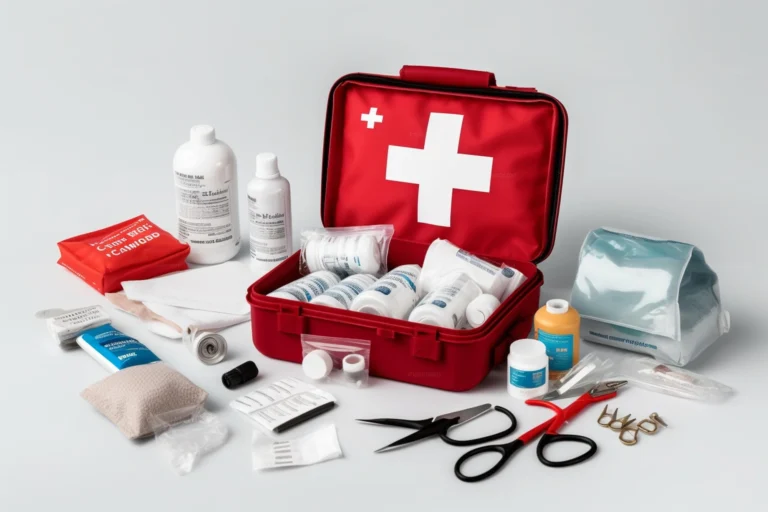
HSE states that there is no mandatory list of items that every workplace First Aid container must contain. What you provide should reflect the findings of the first aid needs assessment. A low hazard office and a construction project involving sharp equipment or remote working may reasonably need different provision.
The practical questions are straightforward. Is the equipment suitable for the injuries you have identified? Is there enough of it? Can people reach it quickly? Is somebody checking stock, packaging and expiry dates? Does the arrangement still work in another part of the site?
If the assessment identifies a specialist hazard, avoid assuming that buying specialist equipment solves the problem on its own. Training, competence, location and the wider emergency procedure matter just as much.
Great Britain and Northern Ireland do not use exactly the same legislation
A UK wide training page should make this distinction clear. England, Scotland and Wales use the Health and Safety First Aid Regulations 1981 and HSE guidance. Northern Ireland has separate Health and Safety First Aid Regulations Northern Ireland 1982, administered by the Health and Safety Executive for Northern Ireland.
The systems are nevertheless closely aligned. HSENI confirms that employers in Northern Ireland also need appropriate First Aid arrangements and that FAW and EFAW remain central workplace First Aid qualifications.
Build First Aid into the rest of your site safety training
First Aid prepares people to respond when something has already gone wrong. It should therefore sit alongside training that helps prevent incidents in the first place. For construction businesses in particular, the most useful training plan is usually the one that reflects the actual activities performed by the workforce.
You can also browse our complete construction training course range if you are planning training for several roles or activities.
Want to organise First Aid training without guessing which course to choose?
Speak to our team about your workforce, workplace and training requirements. We can help you compare the available First Aid courses and discuss individual, group and on site training options.
FAQ – First Aid training
Do you have a question about our first aid courses? Below you will find practical answers about workplace First Aid training, FAW, EFAW, certificates, construction site requirements and course delivery.
Czy wasze kursy są dla mnie odpowiednie?
Tak, nie musisz mieć żadnego wcześniejszego doświadczenia, aby wziąć udział w naszym szkoleniu z pierwszej pomocy. Wystarczy, że masz ukończone 16 lat i poważnie podchodzisz do nauki.
Czy potrzebuję szkolenia z pierwszej pomocy?
Znajomość zasad udzielania pierwszej pomocy może przydać się każdemu, jednak wymagania dotyczące miejsca pracy zależą od oceny potrzeb w zakresie pierwszej pomocy przeprowadzonej przez pracodawcę. Pracodawcy w Wielkiej Brytanii mają obowiązek zapewnić odpowiedni i właściwy sprzęt do udzielania pierwszej pomocy, odpowiednie pomieszczenia oraz personel. W zależności od charakteru miejsca pracy może to oznaczać wyznaczenie osoby odpowiedzialnej, osobę przeszkoloną w zakresie EFAW, osobę przeszkoloną w zakresie FAW lub dodatkowe szkolenia dotyczące konkretnych zagrożeń.
Jaka jest różnica między „pierwszą pomocą w miejscu pracy” a „pierwszą pomocą w nagłych wypadkach w miejscu pracy”?
Kurs „Pierwsza pomoc w nagłych wypadkach w miejscu pracy”, zwany zazwyczaj w skrócie EFAW, przygotowuje osobę udzielającą pierwszej pomocy do udzielenia pomocy w nagłych wypadkach, gdy ktoś ulegnie wypadkowi lub zachoruje w miejscu pracy. Kurs „Pierwsza pomoc w miejscu pracy”, zwany zazwyczaj w skrócie FAW, obejmuje program kursu EFAW oraz szerszy zakres konkretnych urazów i chorób. Odpowiedni poziom należy wybrać na podstawie wyników oceny potrzeb pracodawcy w zakresie pierwszej pomocy.
Skąd mam wiedzieć, jakiego kursu pierwszej pomocy potrzebuje moje miejsce pracy?
Zacznij od oceny potrzeb w zakresie pierwszej pomocy. Weź pod uwagę zagrożenia i ryzyko występujące w miejscu pracy, liczbę pracowników, wielkość i lokalizację zakładu, charakter wykonywanych czynności, system zmianowy, pracę w pojedynkę lub zdalną, wcześniejsze zdarzenia oraz to, jak szybko można uzyskać profesjonalną pomoc medyczną. Na podstawie tej oceny należy następnie ustalić, czy konieczne jest wyznaczenie osoby odpowiedzialnej, przeszkolenie w zakresie EFAW, FAW lub dodatkowe szkolenia.
Ilu ratowników pierwszej pomocy potrzeba w moim miejscu pracy?
Nie ma jednej, ustalonej przepisami liczby, która miałaby zastosowanie do każdego miejsca pracy. HSE stwierdza, że liczba przeszkolonych osób udzielających pierwszej pomocy powinna wynikać z wyników oceny potrzeb w zakresie pierwszej pomocy oraz uwarunkowań danego miejsca pracy. Czynniki takie jak praca o podwyższonym ryzyku, liczba pracowników, oddzielne obszary robocze, system zmianowy, urlopy, nieobecności z powodu choroby oraz odległe lokalizacje mogą mieć wpływ na to, ile przeszkolonych osób jest potrzebnych.
Kim jest osoba wyznaczona i czy musi ona przejść szkolenie z zakresu pierwszej pomocy?
Osoba wyznaczona odpowiada za organizację pierwszej pomocy, gdy w wyniku oceny potrzeb w zakresie pierwszej pomocy stwierdzono, że nie jest wymagana obecność przeszkolonego ratownika. Do jej obowiązków należy dbanie o sprzęt i pomieszczenia przeznaczone do udzielania pierwszej pomocy oraz wezwanie służb ratowniczych w razie potrzeby. HSE nie wymaga od osoby wyznaczonej odbycia formalnego szkolenia z zakresu pierwszej pomocy, choć nie powinna ona udzielać pierwszej pomocy w sytuacjach, do których nie została przeszkolona.
Jak długo zachowuje ważność certyfikat z zakresu pierwszej pomocy w miejscu pracy?
Certyfikaty z szkoleń z zakresu pierwszej pomocy wykorzystywane w miejscu pracy, w tym certyfikaty FAW i EFAW, są ważne przez trzy lata. Pracodawcy powinni monitorować terminy ważności certyfikatów i zorganizować odpowiednie szkolenia odświeżające lub ponowną kwalifikację przed upływem terminu ważności certyfikatów.
Czy osoby udzielające pierwszej pomocy muszą przechodzić coroczne szkolenia odświeżające?
Coroczne szkolenia odświeżające nie są obowiązkowe w trakcie trzyletniego okresu ważności certyfikatu FAW lub EFAW, jednak HSE zdecydowanie je zaleca. Regularne szkolenia odświeżające pomagają wykwalifikowanym ratownikom medycznym utrzymać umiejętności praktyczne i być na bieżąco ze zmianami w procedurach udzielania pierwszej pomocy.
Co się stanie, jeśli wygaśnie mój certyfikat z zakresu pierwszej pomocy?
Po wygaśnięciu certyfikatu z zakresu pierwszej pomocy w miejscu pracy dana osoba nie jest już uznawana za kompetentną do pełnienia funkcji ratownika medycznego w miejscu pracy zgodnie z wytycznymi HSE. Posiadacze certyfikatu FAW mogą odnowić swoje uprawnienia po wygaśnięciu certyfikatu, jednak HSE zaznacza, że w przypadku upływu znacznego czasu – jako przykład podaje się okres dłuższy niż jeden miesiąc – rozsądnym rozwiązaniem może być ukończenie pełnego kursu FAW. Pracodawca powinien zdecydować, która ścieżka odnowienia uprawnień jest odpowiednia.
Czy szkolenie z zakresu pierwszej pomocy jest obowiązkowe dla pracowników budowlanych?
There is no general rule requiring every construction worker to personally hold an FAW or EFAW certificate. Employers must provide adequate and appropriate first aid arrangements, and construction is treated as a higher hazard environment when assessing provision. The number and level of trained first aiders should therefore reflect the workforce, activities, foreseeable injuries, site layout and other findings of the first aid needs assessment.
Can First Aid at Work training be completed online?
HSE accepts blended learning for workplace first aid training, combining e-learning with face to face teaching. Employers should check that enough time is allocated to classroom based learning and practical assessment, and HSE strongly recommends direct observation of practical elements. A course described as fully online should not automatically be assumed to meet the requirements expected for workplace FAW or EFAW competence.
Czy HSE zatwierdza organizacje prowadzące szkolenia z zakresu pierwszej pomocy?
For ordinary workplace FAW and EFAW training in Great Britain, HSE no longer approves first aid training providers or qualifications. This changed on 1 October 2013. Employers are responsible for selecting a competent provider and carrying out appropriate due diligence. HSE approval still exists for certain specialist offshore first aid and medic training.
Czy oferujecie zajęcia z pierwszej pomocy w mojej okolicy?
We conduct our courses at our training centre in Wellingborough, Northamptonshire. We also offer training at selected venues and can arrange on site first aid training for teams. Contact us with your location and the number of learners and we can discuss the available options.
Jakie są ceny kursów pierwszej pomocy?
First aid prices vary from course to course. The final cost depends on the training selected and, where applicable, the delivery arrangements. Contact us for the current price of the course you need and to discuss group or on site training.
Jak długie są kursy?
This depends on the course you choose. Emergency First Aid at Work training and assessment should be at least six hours, excluding breaks, over a minimum of one day. First Aid at Work training and assessment should be at least 18 hours, excluding breaks, over a minimum of three days. Other courses, including refresher and paediatric training, have different durations.
UK guidance used when planning First Aid provision
Urząd ds. Zdrowia i Bezpieczeństwa. HSE is Great Britain’s national regulator for workplace health and safety. Its First Aid at Work guidance explains employer duties, needs assessments, FAW and EFAW provision, First Aid personnel and training provider selection. Read HSE First Aid guidance.
Resuscitation Council UK. The organisation produces evidence based UK resuscitation guidelines used to inform current CPR and AED practice. Read the current Adult Basic Life Support Guidelines.
Department for Education. The statutory EYFS framework defines safeguarding and welfare requirements for early years providers in England, including Paediatric First Aid requirements. Read the current EYFS framework.
Health and Safety Executive for Northern Ireland. HSENI administers the separate workplace First Aid legislation applying in Northern Ireland. Read HSENI First Aid at Work guidance.