

What Is a Slinger Signaller Course?
Our Slinger Signaller Banksman training is specifically designed to give you the key competencies and underpinning knowledge you’ll need to operate safely and efficiently on construction sites. Gain your CPCS Slinger Signaller Red Card and prove your capability in operating mechanical hoists carrying passengers, goods, or both, in compliance with the CPCS Scheme. This qualification goes a long way in the eyes of employers all over the UK, stamping you as highly competent in your field of operation.
Why Become a Slinger Signaller Banksman?
- Opting to become a Slinger Signaller Banksman offers numerous career advantages within the construction industry. Here are the key benefits:
- Professional recognition. Your CPCS Red Card stands as a testament to your expertise and dedication to maintaining high industry standards.
- Enhanced employability. Many construction firms prioritize or even mandate CPCS certification, making you a preferred candidate.
- Competitive salary. Slinger Signallers typically earn around £45,000 – £55,000 annually, with opportunities for higher earnings as you gain experience and additional certifications.
- Commitment to safety. Comprehensive training ensures you adhere to stringent safety protocols, safeguarding both yourself and your colleagues on-site.

Types of Courses and Skills You’ll Develop
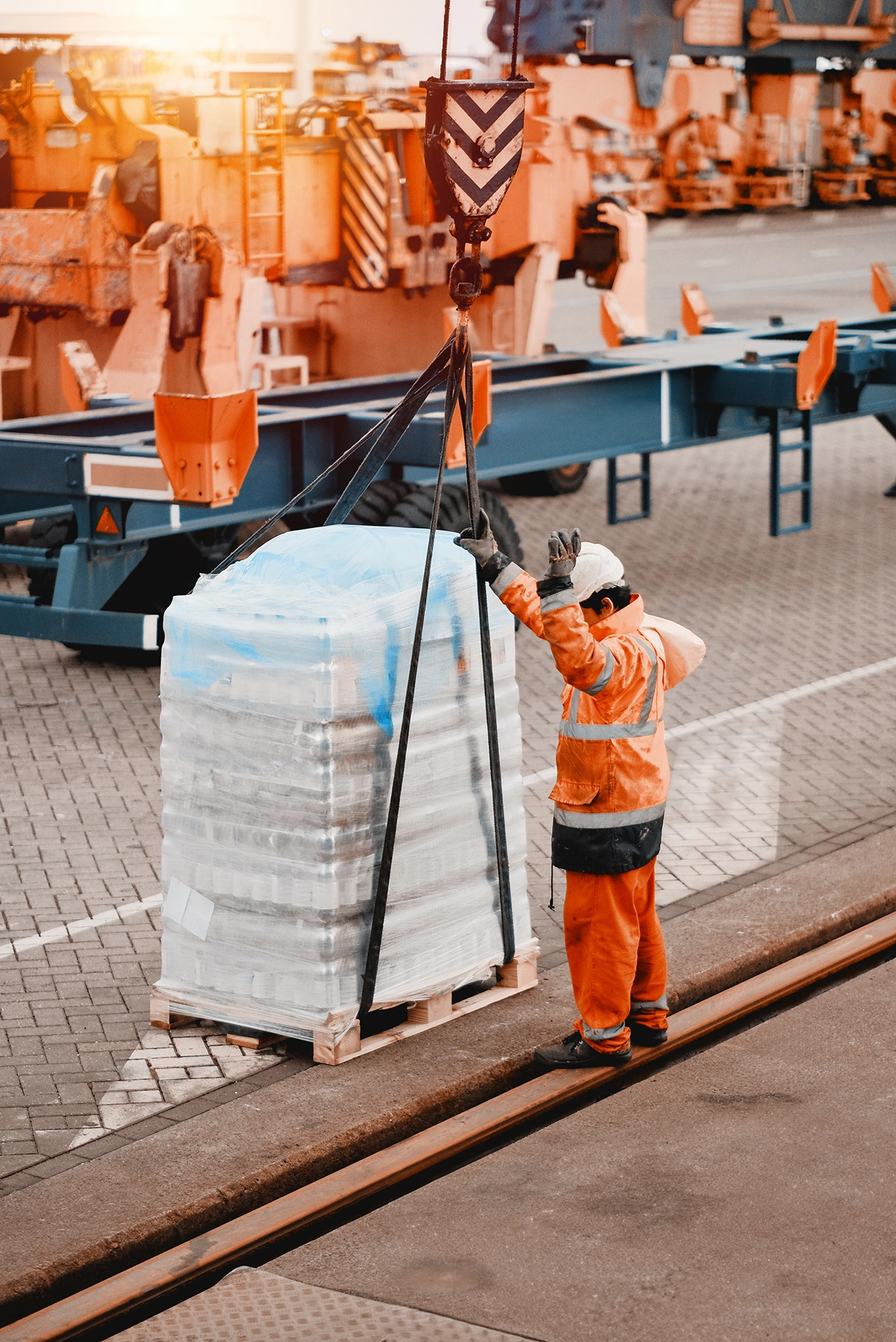
As a Slinger Signaller Banksman, you play a crucial role in coordinating crane operations and ensuring the secure movement of loads. Our comprehensive courses cover a wide range of skills, including:
- Load Assessment: Learn to evaluate the weight and stability of loads to ensure safe lifting and transportation.
- Securing Loads: Master techniques for attaching and detaching loads with precision and safety.
- Effective Communication: Develop proficiency in using hand signals and radio systems to coordinate seamlessly with crane operators.
- Safety Operations: Gain insights into identifying and mitigating hazards, particularly near overhead services and other construction site dangers.
Slinger Signaller Banksman Course Details
- Duration: Our courses typically span from 1 to 5 days, tailored to your experience level and the specific certification you seek.
- Certification: Successfully completing our CPCS Slinger Signaller course awards you the CPCS Red Card, essential for most construction roles.
Slinger Signaller Course Content:
- Legislation & industry standards: Gain a thorough understanding of the legal frameworks and best practices governing lifting operations.
- Roles & responsibilities: Clarify your duties and learn how to collaborate effectively with other site personnel.
- Lifting accessories: Learn to assess, select, and properly attach lifting gear to ensure safe operations.
- Slinging techniques: Develop precise slinging methods suitable for various types of loads.
- Determining load weight: Accurately measure load weights to maintain balance and stability.
- Managing proximity hazards: Identify and manage risks near overhead services and other site-specific obstacles.
- Communication mastery: Perfect the use of hand signals and radio communication to direct crane movements safely.
Enroll Today and Propel Your Career
Ready to shape your future? Dive into our CPCS Slinger Signaller training! Boost your career in construction like never before.
Curious about training dates and locations? Visit our website or give us a call.
Take that leap! Become a certified Slinger Signaller Banksman and open doors to exciting new opportunities in the construction world. Your journey starts here!
Certification and Progression
Upon completing the course, you will undergo both theoretical and practical assessments. Successful candidates receive the CPCS Trained Operator (Red) Card, valid for two years. To advance to the Competent Operator (Blue) Card, you must:
- Accumulate 300 Hours of Experience. Gain hands-on experience operating hoists, documented and endorsed in your CPCS logbook.
- Complete the NVQ Level 2 Assessment. Finish this assessment within two years of obtaining your Red Card.
The CPCS Blue Card is valid for five years and can be renewed, ensuring your qualifications remain current and highly regarded in the industry.
Why Choose Us for Your Slinger Signaller Banksman Training?
- Expert Instructors: Our dedicated trainers bring extensive industry experience, providing personalised guidance to help you excel.
- State-of-the-Art Facilities: Train in spacious, modern environments equipped with the latest machinery, mirroring real-world conditions.
- Flexible Training Options: We offer adaptable scheduling to fit your lifestyle, whether you’re a complete beginner or looking to upskill.
- No Prior Experience Needed: Start your training without any previous construction or driving background.
- Competitive Pricing: We guarantee the lowest prices for CPCS Slinger Signaller training in the UK. If you find a similar course cheaper elsewhere, we’ll match it.
- Additional Certification Paths: For those seeking further qualifications, we also provide NPORS hoist training.
Conclusion of Slinger Signaller Course
Snagging a CPCS Red Card as a Slinger Signaller Banksman is your golden ticket to a thriving construction career. Our all-encompassing training courses equip you with essential skills and certifications. Ready to stand out? Elevate your employability and unlock better job prospects and pay. Why wait? Dive into our Slinger Signaller training course today! Reach out to discover available dates, enrolment choices, and pricing. With our expert guidance, you’ll soar in your career and become an invaluable asset to employers all over the UK.
Do you have any questions about our slinger signaller trainings?
Find Slinger / Singaller course in the UK near You:

CPCS A40A Slinger / Signaller course
A load does not become safe because the crane can lift it
A crane may have enough capacity. The hook may be directly above the load. The site may even look calm. None of that proves the lift is ready. The slinger / signaller has to understand the load, the lifting accessories, the route, the communication system and the people who could be affected before movement begins.
The current CPCS category is A40 Slinger / Signaller. For candidates who need the broadest endorsement, A40A covers All Types and All Duties. It is very different from simply memorising a few hand signals. The March 2026 CPCS training standard expects candidates to work with lifting plans, load information, rated capacities, lifting accessories, centre of gravity, communications, blind load movement and pick and carry activity.
If you searched for slinger signaller training, slinger course, slinger banksman course, CPCS slinger signaller, slinger ticket or even the common misspelling singaller course, this is the role you are usually trying to find.
Slinger / Signaller, banksman and hoist operator. Three jobs that should not be mixed together
Construction language gets messy very quickly. Somebody says banksman, another person says signaller and a third person means a hoist operator. On a lifting operation those differences matter.
Slinger / Signaller
Selects and attaches suitable lifting accessories in line with the lift plan, checks the load and work area, communicates with the lifting equipment operator, controls suspended loads where appropriate and directs load movement to the landing position.
Vehicle banksman or traffic marshal
Directs vehicle movement on or around a site. HSE specifically distinguishes this role from the signaller who directs crane movements during lifting operations.
Crane or lifting equipment operator
Operates the lifting equipment within its permitted duties and the approved lifting arrangement. The operator and signaller work as a team, but their responsibilities are not interchangeable.
Hoist operator
Operates a hoist used for the movement of people or materials where that equipment and category apply. That is not the definition of CPCS A40 Slinger / Signaller.
HSE explains the distinction between banksmen and signallers here.
Who does what in a lifting team?
A competent slinger / signaller needs to know where their authority starts and where it stops. You are not expected to rewrite the lift plan because something feels inconvenient.
Appointed Person
The competent person who plans the lifting operation and has overall responsibility for the lift plan. The current A40A standard identifies this role as the lift planner.
Crane or Lift Supervisor
Supervises the lifting operation on behalf of the Appointed Person and works to the approved method statement or lift plan.
Slinger / Signaller
Connects lifting accessories to the load, initiates movement through agreed signalling, observes the load path, directs the operator and detaches the accessories after the load has been safely landed.
Lifting equipment operator
Operates the crane or other lifting equipment within its permitted duties and follows the agreed instructions of the lifting team.
LOLER requires lifting operations to be properly planned by a competent person, appropriately supervised and carried out safely. The Slinger / Signaller course teaches you how your part of the lift fits into that wider system. It does not turn the Slinger / Signaller into the Appointed Person.
Read HSE guidance on lifting operations and safe systems of work.
How long is the CPCS A40A Slinger / Signaller course?
The current CPCS training standard approved on 18 March 2026 gives specific minimum durations. It also requires the trainer to document why a candidate has been placed on the novice or experienced route. The stated duration cannot simply be shortened because somebody learns quickly.
| Route | Current CPCS minimum | Candidate profile | CPTS published programme |
|---|---|---|---|
| Novice | 21 hours including assessment time for 1 or 2 learners with 1 trainer and 1 machine. 28 hours for 3 learners. 35 hours for 4 learners. | Limited or no demonstrable practical experience in the category. Site experience and a basic knowledge of construction terminology are beneficial. | 3 days. Two days of training and one day of testing. |
| Experienced | 7 hours including assessment time for 1 learner. 14 hours for 2 learners. | A current recognised red card in the category or equivalent experience confirmed through a thorough initial assessment and documented profiling. | 2 days. One day of training and one day of testing. |
The CPCS standard also limits the novice group to four learners with one machine and requires every candidate to cover all learning outcomes with equal and sufficient practical engagement.
Unsure whether you are genuinely experienced?
Tell us what lifting equipment you have worked around, which accessories you have used and what duties you actually performed. A proper route decision is better than choosing the shortest course and discovering the gaps during assessment.
What does All Types and All Duties actually mean?
A40A is deliberately broad. The March 2026 standard expects the candidate to understand lifting operations involving several types of equipment. You are not being trained to operate every crane. You are being trained to perform the Slinger / Signaller role around the lifting operation.
Mobile cranes
Wheeled or crawler mounted cranes that can move between lifting positions.
Tower cranes
Top slew, self erecting and vehicle mounted tower crane configurations are covered within the lifting equipment awareness content.
Lorry loaders
Commercial vehicles or trailers fitted with loader cranes create a different working envelope and communication environment.
Telehandlers used for lifting
Variable reach machines can undertake suspended load duties when correctly equipped and used within their rated capacity and approved configuration.
Excavators used for lifting
The operator and lifting team need the rated object handling information and the machine must be configured for lifting duties.
Overhead travelling cranes
Bridge, gantry and similar crane systems move loads inside a defined operating area and introduce their own route and clearance considerations.
If your employer only needs a restricted A40 endorsement, confirm that before booking. CPCS publishes separate standards for other A40 endorsements as well as A40A.
A lifting accessory is not safe just because it looks strong
The new A40A standard goes much deeper than “choose a sling”. Candidates need to understand markings, capacity, attachment methods, inspection status and how the load itself changes what the accessory is being asked to do.
Chain slings
Check identification, condition, hooks, safety catches, master links and any shortening devices. Do not improvise a shortening method.
Textile slings
Identification and condition matter. Cuts, damaged stitching, heat or chemical damage and missing information can make an accessory unsuitable for use.
Wire rope slings
Capacity and condition need to match the lift. Kinks, broken wires, distortion and termination damage require proper assessment.
Shackles, hooks and eyebolts
The type, working load information, attachment point and direction of loading all matter. One accessory does not suit every connection.
HSE explains LOLER marking and safe working load requirements.
Load weight, centre of gravity and sling angles. This is where the job becomes technical
A suspended load does not care how confident you feel. It responds to gravity, geometry and the way you attach the lifting accessories.
Before the lift, answer four questions
What is the gross load weight? Where is the centre of gravity? Which lifting points are approved? Does the chosen sling arrangement have enough capacity in the configuration being used?
The load weight needs to be known with reasonable accuracy
The current CPCS standard requires candidates to understand how load weight is obtained or estimated and what needs to be included in the gross load. Lifting accessories and attachments can contribute to the total that the equipment is being asked to support.
Centre of gravity decides whether the load wants to stay level
If the centre of gravity is not known, the current standard places the approximate assessment with the Appointed Person. A short trial lift can then confirm whether the load is balanced and whether the sling legs are behaving as intended.
Sling angle changes leg loading
As a sling leg moves further away from vertical, the load in that leg increases. This is why you do not choose capacity from the load weight alone. The sling angle, number of legs, hitch method, load distribution and manufacturer information all matter.
The hitch method can change the usable capacity
A straight vertical hitch, choke hitch and basket hitch do not behave in the same way. The current CPCS standard expects candidates to understand how the attachment method affects the rated capacity and why the correct data must be used rather than guessed.
The first few centimetres of a lift can tell you a lot
One of the most useful additions in the current A40A standard is the emphasis on behaviour during the initial raising of the load.
Hands off. Step away. Safe space.
Before the first raise, the candidate must understand the need to remove hands from the load, step away and move to a safe position. If the load moves unexpectedly after leaving the ground, the correct response is not to grab it and try to win an argument with several tonnes of suspended material.
- Take the strain and observe whether the load lifts evenly.
- Check whether the load twists, tips or shifts.
- Confirm the sling legs remain correctly positioned.
- Stop the lift if the load is unstable or the arrangement is not behaving as expected.
- Wait until the load is steady before any safe adjustment is considered.
- Keep people outside the danger area created by the suspended load and possible movement.
Slinger Signaller hand signals are a language, not a collection of gestures
Google searches such as slinger signaller hand signals and slinger signaller signals make sense. Communication is central to the job. The danger appears when people invent their own shorthand halfway through a lift.
During a lifting operation, signals and voice instructions should come from one person at a time. If hand signals are not enough, the current CPCS standard allows radio communication to supplement the signal code. Instructions should remain brief and clear, and a dedicated radio channel should not be cluttered with unrelated conversation.
What changes when the crane operator cannot see the load?
A blind lift does not remove the need for control. It increases the importance of the communication system, route checks and the position of the signaller.
Check the complete route first
Confirm distances, clearances, the landing position, nearby activities and any point where the load could strike a structure, person or another operation.
Agree the communication method before movement
Where the operator cannot observe the full load path, use an appropriate communication arrangement. That may include radio or additional signallers within a controlled system.
Keep one clear chain of instruction
Multiple people shouting different instructions is not a lifting system. The operator needs to know whose signal has control at each stage.
Prepare the landing area before the load arrives
The destination should be suitable for the load and allow lifting accessories to be removed without placing people under or against the suspended load.
Pick and carry adds movement to an already moving problem
A40A includes all duties, which means the standard covers pick and carry activity. The lifting equipment moves while supporting the suspended load. That creates additional dynamic effects and makes route condition, machine configuration and communication even more important.
- Confirm the travel route and ground condition before movement.
- Consider the manufacturer's rated capacity and any pick and carry reduction stated in the lift plan.
- Keep a safe refuge available to the Slinger / Signaller.
- Do not walk in front of the moving equipment simply to steady a swinging load.
- Use tag lines or other load control methods only where they are appropriate and safe.
- Remember that wind and load sail area can change how the suspended load behaves.
What does the A40A practical assessment actually make you demonstrate?
The current March 2026 training standard contains practical assessment requirements that are far more specific than “attach a sling and give a signal”.
Maximum and minimum radius
Loads are moved and landed at different positions, including work at the lifting equipment's maximum and minimum operating radius.
Long load control
A long load is slewed through at least 180 degrees at the relevant minimum radius.
Pick and carry
One load is moved under pick and carry duties for a minimum distance of 10 metres.
Tag line control
At least one load is controlled using a tag line secured so it cannot be inadvertently disconnected.
Standing up a load
The assessment includes standing a suitable load from horizontal to near vertical and later laying it back down. The standard gives a minimum 3 metre vertical height for the example load.
Accurate landing
Loads must be guided and landed accurately at the specified locations before the accessories are safely detached.
Want to prepare for the real A40A standard, not an old course summary?
Ask about the current novice, experienced or test only route and confirm which A40 endorsement your employer or site requires before you book.
What law and guidance sit behind Slinger / Signaller training?
You do not need to become a solicitor. You do need to understand why the lift plan, lifting accessories, communication arrangements and examination records exist.
LOLER 1998
The Lifting Operations and Lifting Equipment Regulations deal specifically with lifting equipment and lifting operations. HSE guidance explains the duties around planning, supervision, safe execution, marking and thorough examination.
PUWER 1998
The Provision and Use of Work Equipment Regulations deal with the suitability and safe use of work equipment and the competence and training of people using it.
BS 7121
The CPCS A40A standard refers to BS 7121 Part 1 as part of the industry framework for safe crane use and lifting operations.
Safety Signs and Signals Regulations
These rules sit behind the standard signalling system used to direct hazardous movements. HSE guidance L64 explains the principles and recognised signals.
When should a Slinger / Signaller stop the lift?
Knowing when not to continue is part of competence. A lift should not drift forward simply because the crane is booked and another trade is waiting.
- The load weight or centre of gravity is uncertain and the lift plan does not resolve it.
- The accessory markings cannot be read or the equipment does not have the required examination status.
- A sling, shackle, hook, lifting point or other accessory appears damaged or unsuitable.
- The load is not stable during the trial lift.
- The operator cannot see the load or signaller and the agreed alternative communication method is not working.
- The route or landing area has changed since the lift was planned.
- People enter the exclusion area or move beneath the suspended load.
- Wind, ground, visibility or site activity changes the conditions assumed by the lift plan.
- The signaller receives an instruction that conflicts with the approved lifting arrangement.
Stopping a lift for clarification is not a failure. Carrying on without control is.
What does the CPCS Red Card actually prove?
The Red Trained Operator Card is issued after the relevant Health, Safety and Environment test and successful CPCS theory and practical tests at an accredited CPCS test centre. The theory test must be achieved within two years of the Health, Safety and Environment test. The practical test must then be achieved within six months of the theory test and within two years of the Health, Safety and Environment test.
How do you progress to the Blue Competent Operator Card?
For the Red to Blue upgrade route, CPCS currently requires the relevant Red category to be within the permitted period, a relevant Health, Safety and Environment test passed within the last two years and the appropriate vocational qualification for the category.
The often repeated 300 hour figure is not a universal Red to Blue upgrade condition. CPCS uses 300 hours per category as part of the logbook evidence route for Blue Card renewal. That is a different stage of the scheme.
Looking for a Slinger Signaller course near you?
CPTS publishes its main training and test centre at Airfield Road, Wellingborough, NN29 7XA. The website also has regional information for candidates travelling from different parts of the Midlands and surrounding areas. Confirm the actual training and test location for your booking before travelling.
Build your lifting knowledge around the job you actually do
A Slinger / Signaller works inside a lifting team. The most useful next course depends on whether you plan lifts, supervise them, operate the crane or need a different competence scheme.
Official sources used for the technical information
The A40 standards changed in 2026, so old course summaries can now be misleading. Use current documents from the organisations responsible for the scheme and UK lifting safety.
- NOCN CPCS. A40A Slinger / Signaller All Types and All Duties Training Standard approved 18 March 2026.
- NOCN CPCS. Current A40 revision support, theory and practical test documents.
- Health and Safety Executive. LOLER Approved Code of Practice and guidance.
- Health and Safety Executive. Planning and safe systems for construction lifting operations.
- Health and Safety Executive. Banksmen and signallers guidance.
- Health and Safety Executive. Standard safety signs and signals guidance.
Ready to book CPCS A40 Slinger / Signaller training?
Send your experience level, preferred date and the type of lifting work you expect to carry out. We can help you check the appropriate route and current course availability.
FAQ about CPCS Slinger / Signaller training
What is a Slinger / Signaller?
A Slinger / Signaller is a member of the lifting team who selects and connects suitable lifting accessories in line with the lift plan, helps check the load and work area, communicates with the lifting equipment operator, directs load movement and detaches the accessories after the load has been safely landed.
What is CPCS A40A Slinger / Signaller?
CPCS A40A is the Slinger / Signaller endorsement for All Types and All Duties. The current March 2026 standard covers lifting equipment awareness, lifting accessories, load weight and centre of gravity, signalling, load control, blind load movement, pick and carry duties and practical assessment requirements.
Is a Slinger / Signaller the same as a banksman or traffic marshal?
No. HSE distinguishes the roles. A banksman or traffic marshal directs vehicle movements on or around a site, while a signaller is trained to direct crane or lifting equipment movements during lifting operations. The word banksman is often used informally in course searches, but the duties should not be confused.
Is a Slinger / Signaller the same as a hoist operator?
No. CPCS A40 concerns slinging loads and signalling lifting equipment operators. Operating a construction hoist for people or materials is a different equipment role and can fall under a different CPCS category.
How long is the CPCS A40A novice course?
The current A40A standard sets a minimum of 21 hours including assessment time for one or two novice learners with one trainer and one machine. Three learners require 28 hours and four learners require 35 hours. CPTS currently publishes its novice A40A programme as three days with two days of training and one day of testing.
How long is the CPCS A40A experienced course?
The current A40A standard sets a minimum of 7 hours including assessment time for one experienced learner and 14 hours for two experienced learners. The duration must not be reduced. CPTS currently publishes its experienced A40A programme as two days with one day of training and one day of testing.
How is the novice or experienced route selected?
The trainer must use a documented profiling approach based on the learner's knowledge and practical skills. A novice has limited or no demonstrable practical experience in the category. An experienced candidate needs a current recognised red card in the category or equivalent experience confirmed through a thorough initial assessment.
Do I need previous construction experience?
The current A40A novice standard allows candidates with limited or no demonstrable practical experience in the category. It also states that experience of working on site and a basic knowledge of construction terminology would be beneficial. Your route still needs to be selected through profiling.
Do I need a driving licence for Slinger / Signaller training?
The current CPCS A40A training standard does not list a road driving licence as a course prerequisite. The CPCS card route does require the relevant Health, Safety and Environment test followed by the appropriate CPCS theory and practical tests.
What lifting accessories are covered on the course?
The current A40A standard includes accessories such as shackles, eyebolts, hooks, chain slings, textile slings and wire rope slings. Candidates also learn about accessory markings, attachment methods, working load information, condition checks and the importance of valid examination records.
What do WLL and SWL mean?
WLL means Working Load Limit and SWL means Safe Working Load. The current A40A standard requires candidates to interpret lifting accessory markings and understand that usable capacity depends on the accessory, configuration, attachment method and information supplied for the lift. HSE also requires lifting equipment and accessories to be clearly marked with their safe working loads.
Why does the centre of gravity matter?
The centre of gravity affects whether the load will remain balanced when lifted. If its position is not known, the current A40A standard says an approximate assessment should be made by the Appointed Person. A controlled trial lift can then help confirm whether the load and sling arrangement are stable.
Why do sling angles matter?
The force in a sling leg increases as the leg moves further away from vertical. The Slinger / Signaller therefore needs to consider the sling angle, number of legs, attachment method, load distribution and the rated information for the lifting accessories rather than choosing capacity from the load weight alone.
What Slinger Signaller hand signals will I learn?
The course covers the recognised signalling system used to direct lifting movements, including instructions for stopping, raising, lowering, slewing, travel and emergency stopping. The important principle is that the operator and signaller use an agreed standard code rather than improvised gestures.
Can radio communication be used instead of hand signals?
Yes, where hand signals alone are inadequate the current A40A standard allows radio communication to supplement the signalling code. Instructions should be brief and clear, the selected channel should be kept clear of unrelated communication and the lifting team must understand the agreed procedure before movement begins.
What happens if the crane operator cannot see the load or signaller?
The lifting team needs an appropriate communication method that keeps the movement controlled. The load route, clearances and landing position should be checked in advance. If the operator cannot understand the instruction or the agreed communication system fails, the equipment should remain stationary until the situation is clarified.
What is a blind lift?
A blind lift is a lifting situation in which the equipment operator cannot directly see all or part of the load or its travel path. The A40A standard includes load movement where the load is blind to the operator and requires suitable communication and route control.
What does Hands off, Step away, Safe space mean?
It describes the actions expected before the initial raising of a load. Remove your hands from the load, step away and move to a safe position before directing the first lift. If the load moves unexpectedly, stop and let it become steady rather than trying to physically restrain it.
What practical tasks are included in the current A40A standard?
The March 2026 A40A standard includes directing and landing loads at different radii, controlling a long load through at least 180 degrees of slew, completing pick and carry movement for at least 10 metres, using a tag line on at least one load and standing a suitable load from horizontal towards vertical before laying it back down.
What is a slinger ticket or slinger card?
Slinger ticket and slinger card are informal search terms. On the CPCS route, the relevant category is A40 Slinger / Signaller and successful candidates follow the CPCS card process. Employers and principal contractors can specify which competence schemes and endorsements they accept.
How do I get a CPCS Red Trained Operator Card for A40?
You need to pass the relevant Health, Safety and Environment test, then pass the CPCS theory test within two years of that test and the CPCS practical test within six months of the theory test and within two years of the Health, Safety and Environment test. The tests are delivered by an accredited CPCS test centre.
Can I work unsupervised immediately after receiving a CPCS Red Card?
Not automatically. The CPCS Scheme Booklet states that a newly trained operator with a Red Trained Operator Card still requires full and close supervision until they are sufficiently experienced to work unsupervised. Employers also need to provide job specific familiarisation and assessment where required.
Do I need 300 hours before upgrading from CPCS Red to Blue?
No. Current CPCS Red to Blue upgrade guidance does not list 300 hours as a universal upgrade condition. The upgrade route requires the relevant Red category to be within the permitted period, a current relevant Health, Safety and Environment test and the appropriate vocational qualification. The 300 hour figure is used as part of the logbook evidence route for Blue Card renewal.
Where can I take a Slinger / Signaller course near me?
CPTS publishes its main training and test centre at Airfield Road, Wellingborough, NN29 7XA and provides regional course information for candidates travelling from locations including Northampton, Milton Keynes and Peterborough. Confirm the actual training and testing location for your booking before travelling.
How much does the Slinger / Signaller course cost?
Course prices can change and can depend on the route being booked. Check the current CPTS prices page or request a quote for the novice, experienced or test only option rather than relying on an old price shown elsewhere online.
How do I book the course?
Use the CPTS booking form, call 01234 604151 or contact the training team. Before confirming the booking, state your experience level and check which A40 endorsement and course route match the work you need to carry out.