For Companies: pay only 30% with CITB Employer Network Funding
Enquire nowMost lorry loader jobs do not take place on a prepared crane pad. The vehicle may arrive beside a road, in a customer’s yard or on ground that looks firm until the stabilisers begin to take the weight. Before the boom moves, the operator has to decide whether the lift can be carried out from that position.
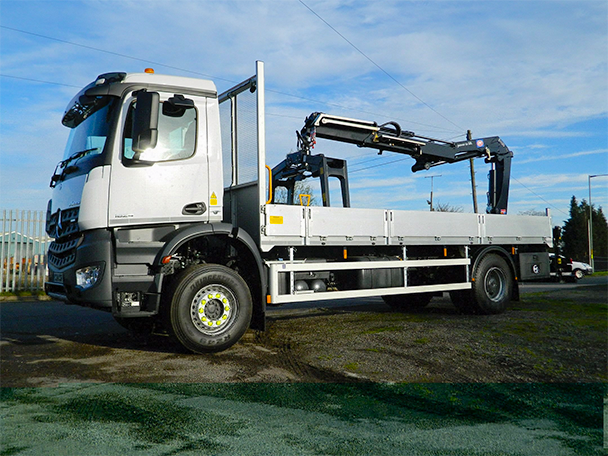
The NPORS N107 Lorry Loader Course covers the checks and operating skills needed to use a vehicle-mounted loader crane. This type of equipment is often referred to as a HIAB, although HIAB is one of several manufacturers of lorry loaders.
We provide full training for beginners, refresher instruction and assessment for experienced operators. Courses are available at our training centre in Wellingborough and at suitable customer sites across the UK.
Tell us which lorry loader you use, what attachments are fitted and the type of loads you handle. We will recommend a course based on the operator’s experience and normal duties.
Call Construction and Plant Training Services on 01234 604 151 to discuss dates and prices.
The course is suitable for people who use a lorry loader to collect, deliver or reposition materials.
Candidates often include:
Previous crane experience is not required for the novice route.
Holding an HGV or LGV driving licence does not by itself demonstrate competence to operate the loader crane. Driving the vehicle and carrying out lifting operations are separate duties with different hazards and training requirements.
Novice candidates start with the vehicle, loader crane controls and information in the manufacturer’s handbook.
Early practical exercises cover setting up the vehicle, deploying the stabilisers and moving the boom without a load. Candidates then progress to lifting and positioning tasks as their control improves.
Time is also spent on the decisions made before lifting begins. These include checking the ground, establishing the load weight and confirming that the crane has enough capacity at the required radius.
This route is intended for operators who already use lorry loaders but need some preparation before assessment.
A candidate may be comfortable with the controls yet less familiar with duty charts, inspection records or the formal procedures expected during an NPORS test.
Training can concentrate on those areas rather than repeating every basic exercise.
Refresher instruction may be useful when an operator has not used a lorry loader recently or is moving to a different crane, control system or attachment.
Employers may also arrange a refresher following a workplace review, change of duties or introduction of new equipment.
Operators who already meet the required standard may be able to take the N107 assessment without completing training first.
Assessment-only candidates must be able to inspect, set up and operate the lorry loader without coaching. They should also understand stabiliser loading, duty charts, lifting accessories, communication and safe stowage of the crane.
We can review your experience before confirming whether this route is appropriate.
Training is based on the vehicle and loader crane used during the course.
The programme can include:
Practical exercises depend on the crane, attachment, loads and space available at the training location.
The vehicle and loader crane should be checked before lifting work begins.
The operator may need to inspect the boom, hydraulic hoses, pins, hooks, controls, stabilisers, safety devices and locking arrangements. Warning indicators and emergency stops must also be considered.
Lifting accessories such as chains, slings and shackles require their own checks. Damaged, unidentified or uncertified equipment should not be used.
The operator should have access to the manufacturer’s handbook, duty information and relevant inspection records. Lifting equipment and accessories must also have the required thorough examinations.
A current examination report does not replace the operator’s pre-use inspection. It confirms the equipment was examined at a particular time, not that it has remained free from damage since then.
The lifting position affects every part of the operation.
Before setting up, the operator needs to check the ground, available space and position of the load. Overhead power lines, buildings, passing vehicles and underground services may make an apparently convenient location unsuitable.
Stabilisers must be extended and positioned in accordance with the manufacturer’s instructions.
The ground beneath them needs to support the forces produced during the lift. Outrigger pads or other suitable load-spreading materials may be required. Their size and condition should match the expected loading and ground conditions.
Stabilisers should not be placed over unsupported covers, drains, trenches or recently disturbed ground.
The operator must also consider the complete working area of the boom. Enough space is needed for the crane and load without allowing either to enter live traffic routes or areas occupied by people.
A lorry loader does not have the same lifting capacity in every position.
As the boom reaches farther from the vehicle, the amount it can lift usually decreases. Crane configuration, stabiliser position, attachment weight and the direction of the lift can also affect capacity.
Before lifting, the operator must know or reliably establish:
The Rated Capacity Indicator or Load Moment Indicator supports the operator. It does not replace the duty chart or proper lift planning.
The operator should not test an uncertain load by lifting it until a warning activates. Where the weight, radius or load condition is unclear, the operation needs to be reviewed before continuing.
Every lifting operation must be planned by someone with the competence required for that particular lift.
For straightforward and familiar work, the plan may be based on an established procedure that the trained operator understands. More difficult lifts can require additional planning, supervision and input from an Appointed Person.
Passing the N107 assessment does not automatically make the operator an Appointed Person or Crane Supervisor.
The operator must work within the agreed lift plan and stop when the conditions no longer match it. A different load, unsuitable ground or an unexpected obstruction can change the operation enough to require a new assessment.
No load should pass above people, occupied vehicle cabs or uncontrolled areas.
Smooth control is important when operating a lorry loader.
Fast slewing, sudden stopping or abrupt boom movements can cause the load to swing. The effect can become more noticeable as the working radius increases.
A trial lift allows the operator to check the balance, attachment and crane response before raising the load farther. If it tilts, shifts or behaves unexpectedly, it should be lowered and the lifting arrangement reviewed.
Visibility must be maintained throughout the movement. Where the operator cannot see the load or landing area, an agreed system of communication is required.
The movement should stop if a signal is unclear or communication is lost.
Loads placed on the vehicle must remain stable and should be positioned with weight distribution in mind. Separate arrangements may be needed to secure them for road transport.
The N107 programme can include the lifting accessories and basic slinging arrangements relevant to the agreed exercises.
Candidates may cover inspection, identification, working load limits, attachment points and protection of lifting accessories from sharp edges.
The course does not automatically replace dedicated Slinger/Signaller training where the operator is expected to sling loads or direct other crane operators as a separate workplace role.
Where another person attaches or directs the load, that person must be trained and competent for the duties they perform.
The required accessories and load types should be agreed before the course. We cannot assume that every booking will include every attachment or slinging method.
The N107 assessment includes theory and practical elements.
The theory test covers the loader crane, duty information, inspections, lifting principles and workplace hazards.
During the practical assessment, the candidate must prepare the vehicle and crane before completing the required lifting tasks.
The assessor will consider:
The test must be completed without unsafe actions or instructor assistance.
Experienced worker candidates are assessed to the same operating standard as candidates who have completed training.
Course duration depends on the operator’s experience and the equipment included.
A complete beginner needs more training than someone who regularly operates the same type of crane. The control system, attachments, load types and number of candidates can also affect the programme.
We will discuss the operator’s experience before recommending a suitable duration rather than assigning every candidate the same number of days.
After passing the assessment, the N107 Lorry Loader category can be recorded on the appropriate NPORS card or registration.
The Traditional NPORS route is generally used outside construction and can be issued for either 3 or 5 years.
Operators working in construction may require an NPORS card displaying the CSCS logo.
The red Trained Operator Card is valid for 2 years and is intended for operators who do not yet hold the relevant NVQ or SVQ.
The blue Competent Operator Card is valid for 5 years and requires the appropriate vocational qualification.
Applicants for a CSCS-logoed NPORS card must also meet the current Health, Safety and Environment test requirements.
Card acceptance is determined by the employer, principal contractor or site. Check which route is required before booking.
HIAB ticket, lorry loader licence and lorry mounted crane licence are common terms used when searching for operator training.
The qualification issued through NPORS is an operator card or registration showing the N107 Lorry Loader category. It is not an HGV or LGV driving licence.
An operator who drives the vehicle on public roads must separately meet the applicable driving licence and road transport requirements.
The employer must also provide authorisation, site information and familiarisation with different lorry loaders where required.
You can complete the NPORS N107 Lorry Loader Course at our training centre in Wellingborough, Northamptonshire.
On-site training is also available at suitable locations across the UK.
For delivery at your premises, you will normally need:
We will review the proposed crane, loads and location before confirming the booking.
Contact Construction and Plant Training Services to arrange novice training, refresher instruction or an experienced worker assessment.
When requesting a quote, tell us which lorry loader you use, the operator’s experience, the attachments fitted and the type of loads normally handled.
Call 01234 604 151 or send us an enquiry to discuss available dates and prices.
The course provides training and assessment for operators of vehicle-mounted loader cranes. It covers crane checks, vehicle positioning, stabilisers, duty charts, load handling, lifting accessories, communication and correct stowage after use.
HIAB is a manufacturer of vehicle-mounted loader cranes, but the name is often used informally for the wider equipment type. NPORS N107 covers lorry loader operation. Training should relate to the crane, controls and attachments the operator will use.
No. Complete beginners can take a novice course. Experienced operators can book targeted preparation, refresher training or an assessment-only route based on their current knowledge and practical ability.
Yes, if you can inspect, set up and operate the lorry loader without instruction. You should already understand stabiliser loading, duty charts, lifting accessories, load control, communication and correct travel configuration.
An HGV or LGV licence is not the same as lorry loader operator training. The driving licence requirements will depend on the vehicle and whether it is driven on public roads. NPORS N107 relates to operation of the loader crane.

The course can cover lifting accessories and slinging arrangements relevant to the practical exercises. It does not automatically replace dedicated Slinger/Signaller training where the operator is expected to sling loads or direct lifting operations as a separate role.
The duration depends on the operator’s experience, the crane, attachments, load types and number of candidates. Beginners need more instruction than experienced operators. We will recommend a suitable programme after reviewing your requirements.
Traditional NPORS registration can be issued for 3 or 5 years. The red NPORS CSCS Trained Operator Card is valid for 2 years. The blue Competent Operator Card is valid for 5 years and requires the relevant NVQ or SVQ.
You must meet the current Health, Safety and Environment test requirements when applying for an NPORS card displaying the CSCS logo. The relevant NPORS or CITB test must normally have been completed within two years before the application.
Yes. We can deliver N107 training at suitable sites across the UK. You will normally need a serviceable lorry loader, duty information, current examination records, certified accessories, representative loads and a controlled lifting area.
The price depends on the operator’s experience, the amount of training required, the crane and attachments, the number of candidates and the location. Contact us with these details for a tailored quotation.
We appreciate your message and will respond as soon as possible.