For Companies: pay only 30% with CITB Employer Network Funding
Enquire nowA material re-handler may spend most of the shift working in one yard, but the conditions around it rarely stay the same. Delivery vehicles arrive, stockpiles change shape and people move between different parts of the site. The operator must keep control of the attachment while watching the machine’s full slewing area.
Our NPORS N722 Material Re-Handler 360 Course covers the checks, practical skills and operating knowledge needed to use this type of machine at work.
Training is available for complete beginners, operators who need a refresher and experienced workers who are ready to take the NPORS assessment. Courses can be completed at our training centre in Wellingborough or at suitable customer sites across the UK.
Tell us which machine and attachments you use when requesting a quote. We will recommend a training route based on the operator’s experience and the work they are expected to carry out.
Call Construction and Plant Training Services on 01234 604 151 to discuss dates and prices.
The course is suitable for people who operate material re-handlers in recycling plants, waste-transfer stations, ports, timber yards, construction sites and industrial premises.
Candidates may include:
Previous experience is not required for novice training.
Experience with an excavator can be helpful, but it does not automatically prepare someone for material re-handling work. Attachments, load behaviour, visibility and the working environment may be different from those involved in conventional digging.
We can provide full novice training, experienced operator preparation, refresher instruction and assessment-only testing.
Novice candidates begin with the machine’s controls, main components and safety systems.
The first practical exercises concentrate on starting, stopping, steering and controlling the upper structure. Candidates then move on to attachment control and basic material-handling tasks.
A new operator needs time to coordinate the machine’s movements. Slewing, raising the boom and opening or closing a grab at the same time can feel unfamiliar at first.
Training progresses as the candidate becomes more consistent. The aim is to develop controlled operation and good observation rather than simply complete a set number of exercises.
This route is intended for operators who already use material re-handlers but need preparation before assessment.
Some candidates have strong practical skills but need to review inspection procedures, attachment checks or the terminology used during the NPORS test. Others may need further practice loading vehicles, working around stockpiles or controlling the machine in a restricted yard.
The instructor can concentrate on those areas instead of repeating basic exercises unnecessarily.
Refresher training may be appropriate when an operator has not used a material re-handler recently or is moving to a different type of machine.
It can also be arranged following a workplace review, change of attachment or introduction of new operating procedures.
Operators who already meet the required standard may be able to take the N722 assessment without completing a training course first.
Assessment-only candidates should be able to inspect, prepare and operate the machine without coaching. They must also understand attachment security, load control, stability, restricted visibility and the correct shutdown procedure.
We can discuss your experience before confirming whether the test-only route is suitable.
Training is based on the machine used during the course and the information provided in its manufacturer’s handbook.
You will learn how to identify the main components, controls, safety systems and operating limitations. The programme also considers the operator’s responsibilities and the action required when a defect is discovered.
Course content can include:
The practical exercises will depend on the machine, attachment, material and training area available.
The operator should inspect the material re-handler before beginning work.
Checks can include the undercarriage, wheels or tracks, hydraulic hoses, pins, guards, access steps, windows, mirrors, cameras and warning systems. The cab, seat restraint and emergency controls should also be checked where applicable.
Particular attention should be given to the boom, dipper and attachment.
Damage, excessive wear or leaking hydraulic components can affect control of the machine or the load. A defect should be reported through the correct procedure rather than ignored until the end of the shift.
The manufacturer’s handbook should be available for the specific machine being used. Controls, operating limits and attachment procedures can differ between models, even when the machines appear similar.
A material re-handler can have substantial blind spots.
The boom, attachment, cab position and counterweight may all restrict what the operator can see. The problem can change as the upper structure slews or the attachment is raised.
Before starting a task, the operator should check the work area and identify where people or vehicles could enter the machine’s operating zone.
Pedestrians should be kept away from the slewing area. Barriers, marked routes and controlled access may be required, particularly in recycling yards where workers, visitors and delivery drivers share the premises.
Cameras and mirrors can help, but they do not replace a well-organised site or effective segregation.
Where the operator cannot maintain a clear view, a trained banksman or plant marshal may be needed. Communication signals should be agreed before the operation begins.
Materials do not all behave in the same way.
Loose waste, timber, scrap metal and bulk products can shift, separate or become caught in the attachment. The operator needs to understand what is being handled and whether the selected attachment is suitable.
A load should be kept under control throughout the movement. Sudden slewing, braking or attachment movements can affect stability and cause material to fall.
The operator should also consider:
Where the weight or behaviour of the material is uncertain, the task should be stopped and reviewed rather than attempted through trial and error.
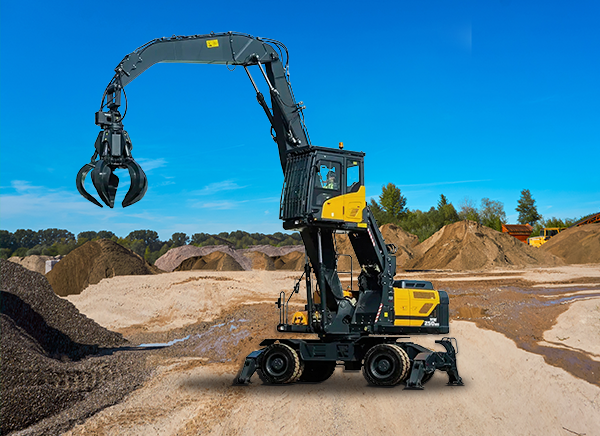
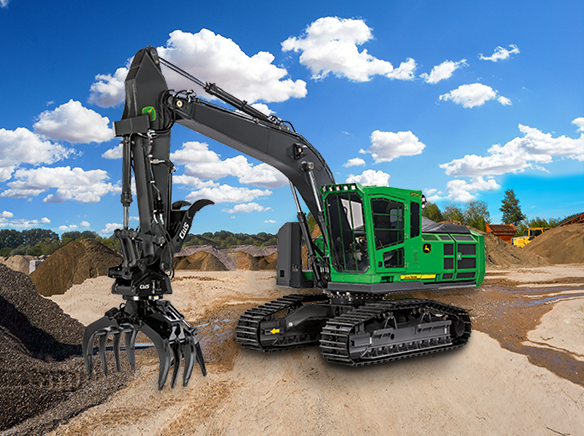
Material re-handlers may be fitted with sorting grabs, clamshell grabs, magnets or other compatible attachments.
Training involving a particular attachment must be agreed before the course. We cannot assume that every machine or training location will have all attachment types available.
Where attachment work is included, candidates can learn how to:
An attachment should not be treated as secure simply because a control has been operated. The checks required by the manufacturer still need to be completed.
Magnetic attachments introduce additional considerations, including power supply, loss of magnetism and control of the exclusion zone. Training must reflect the actual equipment being used.
Loading work requires coordination between the material re-handler operator and everyone else involved.
Before loading begins, the vehicle or container should be placed in an agreed position. The driver’s location and communication arrangements must be clear.
The operator needs to avoid slewing over people or occupied cabs. The attachment should be controlled so that material does not strike the vehicle, spill outside the loading area or create an uneven load.
When loading a hopper or processing machine, the operator should maintain suitable clearance and avoid contact with guards, conveyors or supporting structures.
The work area should provide enough room for the machine to operate without the counterweight or attachment entering another traffic route.
If the driver, banksman or operator loses sight of the agreed signal, the movement should stop until communication has been restored.
Machine stability can change as the boom is raised, extended or moved away from the centre of the undercarriage.
A load handled close to the machine may have a different effect from the same load held at a greater reach. Slewing quickly or stopping suddenly can add further forces.
Ground conditions must also be considered. Soft areas, voids, slopes and poorly maintained yard surfaces may not provide adequate support.
Where stabilisers or outriggers are fitted, they must be used in line with the manufacturer’s instructions. Suitable spreader arrangements may be required.
The operator should not rely on the machine’s weight alone to provide stability. The load, attachment, reach, ground and machine configuration all need to be considered together.
The N722 assessment includes theory and practical elements.
The theory test checks your understanding of the machine, operating procedures, workplace hazards and the responsibilities of the operator.
During the practical assessment, you will be expected to inspect and prepare the material re-handler before completing the required operating tasks.
The assessor will consider:
You must complete the test without unsafe actions or instructor assistance.
Experienced worker candidates are assessed to the same operating standard as candidates who complete novice training.
Course duration depends on the candidate’s experience and the route selected.
A beginner requires more time to become familiar with the machine and attachment controls. An experienced operator may only need targeted preparation or the assessment itself.
The programme can also be affected by:
We will discuss these points before recommending a course duration.
After passing the assessment, the N722 category can be recorded on the appropriate NPORS card or registration.
The correct route depends on the industry in which you work and whether you hold the relevant vocational qualification.
The Traditional NPORS route is generally used outside construction, where a card displaying the CSCS logo is not required.
Registration can be issued for either 3 or 5 years. The period should be agreed with the training provider when the booking is arranged.
Candidates working in construction who do not hold the relevant NVQ or SVQ will normally follow the red Trained Operator route.
The card is valid for 2 years. During this period, the operator must complete the applicable vocational qualification to progress to the Competent Operator Card.
Applicants must also meet the current NPORS Health, Safety and Environment test requirements.
The blue Competent Operator Card is intended for operators who have passed the plant assessment and hold the relevant NVQ or SVQ.
It is valid for 5 years and is issued with a CPD record or operator logbook.
Card requirements can vary between industries, employers and projects. Check which route is required before booking.
Material handler licence, 360 grab ticket and material re-handler ticket are common terms used by operators and employers.
The result of the NPORS process is an operator card or registration showing the N722 Material Re-Handler 360 category. It is not a government-issued driving licence.
The card provides evidence that the operator has completed the relevant training or assessment. Employers must still provide site induction, machine familiarisation and authorisation where required.
You can complete the NPORS N722 Material Re-Handler 360 Course at our training centre in Wellingborough, Northamptonshire.
We can also deliver training at suitable customer sites across the UK.
For on-site delivery, the customer will normally need to provide:
We will review the proposed machine and work area before confirming the booking.
Contact Construction and Plant Training Services to arrange novice training, a refresher or an experienced worker assessment.
When requesting a quote, tell us:
Call 01234 604 151 or send us an enquiry to discuss available dates and prices.
The course provides training and assessment for operators of 360-degree material re-handlers. It covers machine checks, travelling, slewing, attachment control, load handling, visibility, exclusion zones and end-of-work procedures.
No. Complete beginners can take a novice course starting with machine familiarisation and basic control exercises. Experienced operators can book targeted preparation, refresher training or an assessment-only route.
Yes, if you can inspect, prepare and operate the material re-handler without instruction. You should already understand attachment security, machine stability, load control, visibility, exclusion zones and correct shutdown procedures.
Material re-handlers may use wheeled or tracked undercarriages. The training and assessment will relate to the machine available for the course. Tell us which type you operate when requesting a quotation so that we can confirm the correct arrangements.
Training may involve sorting grabs, clamshell grabs, magnets or other compatible attachments where the correct equipment is available. The attachment required should be agreed before booking because not every course or machine will include all attachment types.
The duration depends on the operator’s experience, the machine, attachment, number of candidates and training route. Beginners need more practical instruction than experienced operators. We will recommend a suitable programme after discussing your requirements.
Material handler licence, 360 grab ticket and material re-handler ticket are common industry terms. After passing the assessment, the N722 category can be recorded on an NPORS operator card or registration. It is not a government-issued driving licence.
A Traditional NPORS registration can be issued for 3 or 5 years. The red NPORS CSCS Trained Operator Card is valid for 2 years. The blue Competent Operator Card is valid for 5 years and normally requires the relevant NVQ or SVQ.
You must meet the current Health, Safety and Environment test requirements when applying for an NPORS card displaying the CSCS logo. The relevant NPORS or CITB touch-screen test must normally have been completed within two years before the application.
Yes. We can deliver training at suitable sites across the UK. You will normally need a serviceable material re-handler, the manufacturer’s handbook, the agreed attachment, a controlled work area and suitable materials or loading targets.
The price depends on the candidate’s experience, the amount of training required, the machine and attachment, the number of people attending and the location. Contact us with these details for a tailored quotation.
We appreciate your message and will respond as soon as possible.