For Companies: pay only 30% with CITB Employer Network Funding
Enquire nowOne of the earliest questions that need to be asked before work is carried out above ground level is whether there is an alternative method of carrying out the task. This is often forgotten once there is a ladder handy or equipment used on the task previously.
NPORS N404 Safe Working at Height training course covers risk assessment and control of the activity that needs to be performed prior to any person going above ground level. Other topics include equipment choice, exclusion zones, falling objects and prevention versus arrest of a fall.
Training is available at our centre in Wellingborough. Courses can also be delivered at suitable workplaces across the UK.
Call Construction and Plant Training Services on 01234 604 151 to discuss your work, course dates and prices.
N404 is suitable for people whose work may expose them to a fall risk.
Candidates may work in construction, maintenance, utilities, warehousing, manufacturing, roofing, facilities management or grounds maintenance.
The course may be useful for:
Previous working-at-height experience is not normally necessary.
N404 provides broad work-at-height training. It does not qualify someone to operate every type of access equipment, erect a scaffold or tower, inspect specialist fall-protection systems or carry out rope access work.
There is no fixed minimum height.
Work at height means work in a place where a person could fall and suffer an injury if suitable precautions were not in place. The fall could be from one level to another or into an opening below ground.
Examples include:
A low-level fall can still cause serious harm. The task should be judged by the risk rather than an assumed safe number of metres.
The course is based on the responsibilities of people involved in planning, controlling or carrying out work at height.
Subjects can include:
Practical examples depend on the equipment and facilities agreed for the course. Tell us which access methods your employees use before booking.
The work-at-height hierarchy should be considered in order.
First, avoid working at height where it is reasonably practicable. A component might be assembled at ground level, a lighting mast lowered or an extendable tool used instead of a ladder.
When the work cannot be avoided, the next step is to prevent a fall. This may involve an existing protected workplace or equipment such as a scaffold, tower, guarded platform or MEWP.
Only when a fall cannot be fully prevented should measures be selected to reduce its distance or consequences.
Collective protection should normally be considered before personal protection. Guardrails protect everyone in the area without each person having to connect equipment correctly. A harness and lanyard depend on the user, attachment point and complete system being suitable.
Risk assessments identify hazards and the precautions needed to control them. Method statements explain how the job should be carried out.
A supervisor may be responsible for explaining this information to the workforce and checking that it has been understood.
Collecting signatures is not the same as delivering an effective briefing. Workers should know what they are expected to do, which controls apply and who to speak to when something changes.
RAMS may also need to be reviewed during the project. Supervisors should not create an improvised method simply because the original plan no longer works.
The task may need to pause while the risks and working arrangements are reconsidered.
Supervision continues after the morning briefing.
Conditions can change during a shift. A barrier may be removed for a delivery, materials can block a pedestrian route or an excavation may be affected by further work or poor weather.
Checks may involve:
Certain statutory inspections must be completed by a competent person. S029 helps supervisors understand what should be checked and when a problem needs to be escalated, but it does not qualify them to carry out every specialist inspection.
The nearest item of access equipment is not necessarily the correct one.
Selection should take account of:
A ladder may be suitable for some low-risk, short-duration tasks. It should not be chosen automatically because setting up safer equipment would take longer.
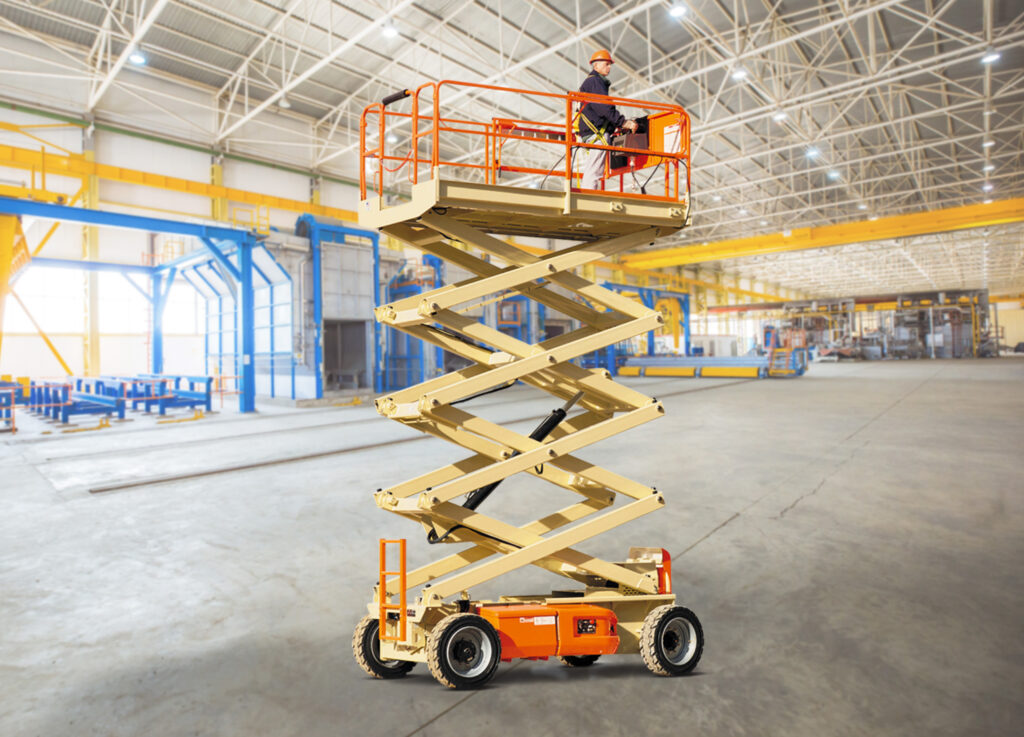
Scaffolds, towers and MEWPs can provide better fall prevention for longer or more demanding work, but each requires the correct setup, inspections and trained users.
Ladders are not banned from workplaces. Their use must be justified by the risk assessment.
The equipment should be suitable, stable and in good condition. The user needs a secure handhold, should avoid overreaching and must not position a ladder against a weak surface.
The task also matters. Heavy work, significant side loading or a job requiring both hands for an extended period may call for a different form of access.
HSE uses 30 minutes as a guide when considering how long someone will remain on a leaning ladder or stepladder, but duration is not the only factor. The risk must be assessed first.
NPORS N404 introduces the selection principles. More focused ladder instruction can be arranged through the relevant Safe Use of Ladders course.
Roof sheets, rooflights and other fragile surfaces may not support a person’s weight.
They should be identified before access is allowed. Controls may include avoiding the surface, working from below, using suitable platforms or providing fall-prevention systems.
Floor openings and incomplete edges require similar attention. A cover must be suitable for the load, secured against movement and clearly identified. An unsecured sheet placed over a hole is not reliable protection.
People below can also be injured by tools or materials.
The area may need toe boards, covered access routes, tool controls or an exclusion zone. Throwing materials from height without an agreed system is not acceptable.
Work restraint and fall arrest are not the same.
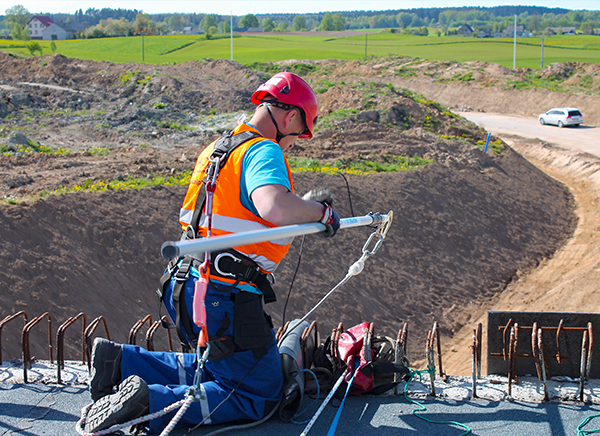
A restraint system is arranged to prevent the user from reaching a position where a fall could occur.
A fall-arrest system allows a fall to begin but stops the person before they strike a lower level. Its effectiveness depends on the harness, lanyard or device, anchor point, available clearance and the compatibility of every component.
A rescue plan is also required. A person left suspended after a fall may need to be recovered quickly, and the arrangements should not be invented after the incident has happened.
N404 introduces these principles. Candidates who must select, inspect, fit and use harness equipment in their work may also require the NPORS N723 Harness and Fall Arrest Course.
Access and fall-protection equipment must be suitable and maintained.
Before use, workers should look for obvious damage, contamination, missing parts or unauthorised alterations. Any defect that could affect safety must be reported and the equipment removed from use where necessary.
Some equipment requires formal inspection by a competent person. The inspection frequency and record will depend on the equipment, how it was installed and the applicable requirements.
A brief visual check by the user does not replace a statutory inspection. Equally, an inspection record does not remove the need to check for damage before each use.
Conditions around the task can change the equipment choice.
Strong winds may affect platforms, towers, roof work and materials. Rain, ice or mud can make access surfaces and ladder feet less reliable.
Overhead electrical cables and exposed conductors need to be identified before equipment is raised or positioned nearby. Metal ladders are not suitable where electrical contact could occur.
Vehicle routes and public areas may also require barriers or a controlled exclusion zone. The protection should cover people below as well as the person working at height.

The plan should consider what happens if equipment fails, a person becomes unwell or a fall-arrest system is activated.
The arrangements may include:
The detail should match the task. A simple ladder job and work using personal fall arrest will not require the same rescue arrangements.
Workers need to understand the plan before the job begins.
Candidates complete the course activities and the required assessment.
They should be able to identify common hazards, explain the hierarchy of control and show how equipment should be selected and checked for the planned work.
Successful candidates receive the relevant NPORS N404 registration or certification.
The exact product, validity period and registration route should be confirmed when the booking is made. N404 should not be described automatically as a three-year operator card without checking the current NPORS arrangements.
The Work at Height Regulations do not state that every worker must hold an N404 certificate.
The law requires work at height to be properly planned, appropriately supervised and carried out by people who are competent for their duties. Training should match the work, equipment and level of risk.
NPORS N404 is one way of providing structured training and recording that the candidate has completed an assessment.
Additional qualifications may still be needed for MEWPs, towers, scaffolding, ladders, harness systems or specialist access work.
The course is available at our Wellingborough training centre in Northamptonshire.
On-site delivery can be arranged for suitable company bookings across the UK. The customer will normally need to provide a suitable training space and any equipment that is to form part of the agreed practical content.
Before confirming workplace training, we will discuss:
This helps us confirm whether N404 is sufficient or whether an equipment-specific course should also be considered.
Tell us what kind of work the candidates carry out and which access equipment they normally use. We will confirm the available course format, timetable and certification arrangements.
Training can be arranged in Wellingborough or, for suitable company groups, at your workplace.
Call CPTS on 01234 604 151 or use the course enquiry form for current dates and prices.
N404 provides training and assessment in planning and controlling work at height. It covers fall hazards, risk assessments, equipment selection, the work-at-height hierarchy, exclusion zones, equipment checks and emergency arrangements.

Work at height means work in any place where a person could fall and suffer an injury if suitable precautions were not in place. This can include ladders, platforms, roofs, open edges, fragile surfaces and openings below ground level.
No. There is no fixed minimum measurement. The risk depends on whether a person could fall and be injured, not simply on the number of metres above the ground.

The law does not name N404 as a compulsory certificate. Employers must ensure that work at height is properly planned, supervised and completed by competent people with training appropriate to their duties and equipment.
No. N404 provides general work-at-height training. Separate equipment-specific training may be required to operate a MEWP, assemble a mobile access tower, erect scaffolding or use other specialist access systems.
N404 introduces fall restraint, fall arrest and the need for suitable rescue arrangements. Candidates who must inspect, fit and use harness equipment may also require the NPORS N723 Harness and Fall Arrest Course.
Yes. A ladder may be suitable when the risk assessment shows that the task is low risk and the use of equipment providing greater protection is not justified. The ladder must be suitable, stable, inspected and used by a competent person.
The timetable depends on the agreed course format, group size and practical content. CPTS will confirm the duration and attendance times before the booking is completed.
Successful candidates receive the relevant NPORS N404 registration or certification. The exact product, validity period and registration route should be confirmed when booking because these details can depend on the current NPORS arrangements.
Yes. On-site training can be arranged at suitable workplaces across the UK. The customer will normally need to provide an appropriate training area and any access equipment included in the agreed practical exercises.
The price depends on the number of candidates, delivery location, course format and equipment required. Contact CPTS with details of the work and group size for a quotation.
We appreciate your message and will respond as soon as possible.