For Companies: pay only 30% with CITB Employer Network Funding

Enquire now

NPORS N726 Quick Hitch Awareness Course

NPORS N726 Quick Hitch Awareness Course

Changing a bucket is a routine job on many sites. Problems begin when the operator assumes that the attachment has locked, forgets a retaining pin or carries on without completing a proper security check.

The NPORS N726 Quick Hitch Awareness Course is for people who fit, remove or work with attachments connected through a quick hitch. It covers manual, semi-automatic and automatic systems, with the emphasis on following the correct procedure for the hitch and machine being used.

Training is available at our centre in Wellingborough and at suitable customer sites across the UK. We can provide instruction for people using a quick hitch for the first time as well as experienced operators who need a refresher or formal assessment.

Tell us which machine and quick hitch system you use when requesting a quote. This allows us to prepare training that reflects the equipment found at your workplace.

Call Construction and Plant Training Services on 01234 604 151 to discuss dates and prices.

Who Should Take the N726 Course?

The course is primarily intended for excavator and plant operators who change buckets or other attachments using a quick hitch.

It may also be useful for:

  • Operators moving to a different quick hitch system.
  • Groundworkers who work close to attachment changeovers.
  • Supervisors responsible for plant operations.
  • Employers introducing new machines or attachments.
  • Experienced operators who require refresher training.
  • Candidates who need the N726 category added to their NPORS registration.


Previous experience is not required for the training route.

However, N726 is focused on quick hitch systems. It does not replace full training for the excavator or other item of plant to which the hitch is fitted. Operators must still be trained, competent and authorised to use the machine itself.

What Is a Quick Hitch?

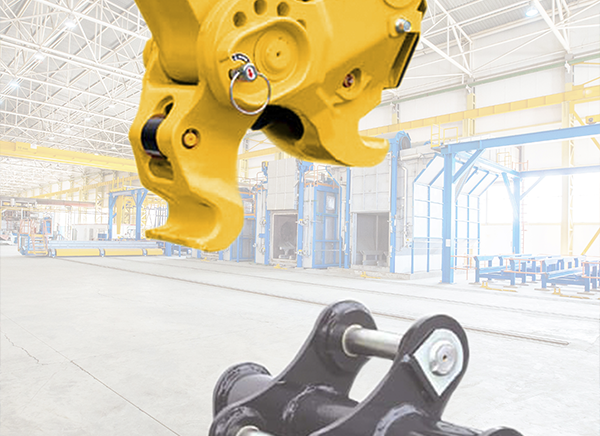
A quick hitch, also known as a quick coupler, is fitted between the machine arm and the attachment. It allows buckets and compatible tools to be changed without removing the main attachment pins in the traditional way.

The design can save time, but only when the hitch is used correctly.

A connection may appear secure even when part of the locking process has been missed. In some cases, the attachment may remain in place for several movements before becoming loose.

For that reason, the operator must understand the exact hitch fitted to the machine and complete every check required by its manufacturer.

Manual, Semi-Automatic and Automatic Quick Hitches

Quick hitches are commonly placed into three broad groups.

Manual Quick Hitches

A manual hitch requires the operator to leave the cab and secure or release the mechanism by hand.

The exact procedure depends on the design. It may involve fitting a pin, tightening a locking mechanism or using a dedicated tool.

The machine should be isolated before anyone approaches the attachment area. The operator must also make sure the attachment is supported and cannot move unexpectedly.

Semi-Automatic Quick Hitches

A semi-automatic hitch normally allows part of the connection to be controlled from the cab but still requires a separate retaining pin or bar to be fitted manually.

The pin is not optional. Without it, an attachment may initially appear connected but can later become detached.

Operators must use the correct pin specified for the hitch. Bolts, pieces of steel or other improvised substitutes must not be used.

Automatic Quick Hitches

An automatic hitch is designed to complete the locking process without the operator manually inserting a retaining pin.

Automatic does not mean that no checks are required.

The operator must still follow the correct connection sequence, monitor any indicators and confirm that the attachment is securely engaged before returning to work.

What Does the N726 Course Cover?

Training is based on the quick hitch and machine used during the course.

The programme can include:

  • The responsibilities of the plant operator.
  • Different types of quick hitch systems.
  • The manufacturer’s operating instructions.
  • Main hitch components and locking mechanisms.
  • Safety pins, bars, indicators and warning devices.
  • Pre-use inspections and defect reporting.
  • Preparing a suitable changeover area.
  • Safe machine isolation.
  • Fitting and removing attachments.
  • Checking attachment compatibility.
  • Visual and functional security checks.
  • Keeping people outside the danger area.
  • Correct attachment storage.
  • End-of-work and shutdown procedures.


Practical exercises will depend on the machine, hitch and attachments available at the training location.

Checking the Hitch Before Use

The quick hitch should be inspected before work begins and whenever a different attachment is fitted.

The operator should look for wear, damage, missing components, hydraulic leaks and contamination around the locking mechanism. Pins, hooks and contact points should be checked in line with the manufacturer’s instructions.

Labels, indicators and warning systems must be visible and working correctly.

Where a retaining pin or bar is required, it must be the correct item for that hitch. A damaged, bent or unsuitable replacement may not provide the intended protection.

A fault affecting the security of the attachment should be reported immediately. The equipment must not be used until the problem has been resolved.

Preparing the Attachment Changeover Area

Attachment changes should take place on firm, suitable ground with enough room to position the machine correctly.

The area must be kept clear of people who are not involved in the task. Groundworkers should not stand beneath the machine arm, close to the attachment or inside the excavator’s slewing area.

The attachment should be placed in a stable position before it is released.

Poorly stored buckets and tools can roll, tip or make the next connection difficult. The operator should consider the attachment’s weight, shape and connection points before lowering it.

Visibility is also important. If the operator cannot see the locking mechanism clearly from the cab, the machine should be made safe before a visual check is completed from the ground.

Fitting and Removing Attachments

The connection sequence varies between quick hitch systems. There is no single procedure that can safely be applied to every make and model.

Operators must follow the instructions for the equipment in front of them.

A typical changeover involves:

  • Positioning the machine and attachment correctly.
  • Engaging the first attachment pin or connection point.
  • Operating the locking mechanism.
  • Fitting the retaining pin where required.
  • Checking indicators or warning devices.
  • Completing visual and functional security checks.
  • Keeping the attachment low during the initial test.


The attachment should not be raised over people, vehicles or structures while its security is being confirmed.

When disconnecting, the operator must make sure the attachment is fully supported before releasing the locking mechanism.

Confirming That the Attachment Is Secure

Operating the locking control does not prove that the attachment has connected correctly.

The operator must complete the checks specified by the hitch manufacturer. These may include inspecting the locking position, confirming that a retaining pin is fitted and carefully testing the connection with the attachment close to the ground.

The method sometimes called a shake, curl or bump test must only be used where it forms part of the manufacturer’s procedure. It should not replace a visual inspection.

If the operator is uncertain about the connection, the attachment should be lowered and the process repeated.

Work should never continue on the assumption that the hitch will settle into place during use.

Working Around Other People

A detached bucket or tool can cause fatal injuries.

No one should stand beneath a raised attachment or enter the machine’s operating area simply to inspect the hitch while the machine remains active.

Before anyone approaches, the operator should place the attachment in a safe position and isolate the controls. Communication between the operator and the person on the ground must be clear.

An exclusion zone may be required during attachment changes, particularly on busy sites or where the public could enter the area.

Supervisors should also monitor the procedure. Repeated changes carried out without the correct pin or security check should not become accepted simply because an attachment has not yet fallen.

Quick Hitches Used During Lifting Operations

Extra care is required where an excavator and attachment are used as part of a lifting operation.

The machine, hitch, attachment and lifting point must be suitable for the task. The operation also needs to meet the relevant lifting plan, examination and inspection requirements.

Completing N726 Quick Hitch Awareness does not by itself qualify someone to plan lifting operations or work as a Slinger/Signaller.

Additional training may be required depending on the operator’s role and the type of lifting work being carried out.

Theory and Practical Assessment

Candidates complete theory and practical assessments.

The theory element checks understanding of quick hitch types, manufacturer instructions, inspections, common hazards and attachment security.

During the practical assessment, the candidate may be required to:

  • Inspect the quick hitch and attachment.
  • Prepare the machine and changeover area.
  • Connect an attachment using the correct procedure.
  • Fit any required retaining device.
  • Complete visual and functional checks.
  • Remove and store the attachment correctly.
  • Leave the machine in a safe condition.


The candidate must demonstrate that the task can be completed without unsafe shortcuts or instructor assistance.

How Long Does the N726 Course Take?

The duration depends on the candidate’s experience, the number of people attending and the quick hitch systems included.

An operator who regularly uses one type of hitch may only require a short refresher and assessment. A person with no previous experience will need more explanation and supervised practice.

Training involving several hitch types or different machines may also require additional time.

We will review your requirements before recommending the course format.

NPORS Certification and Card Options

After successfully completing the training and assessment, candidates can receive the relevant NPORS registration or certification for N726 Quick Hitch Awareness.

Traditional NPORS registration can normally be issued for either 3 or 5 years.

Where a card displaying the CSCS logo is required, the candidate must meet the current NPORS card requirements. This may include a valid NPORS or CITB Health, Safety and Environment test and, for a Competent Operator Card, the applicable vocational qualification.

The exact card product can depend on the candidate’s existing NPORS categories and qualifications. We will confirm the appropriate option before the booking is completed.

Training in Wellingborough or on Your Site

The NPORS N726 Quick Hitch Awareness Course is available at our training centre in Wellingborough, Northamptonshire.

We can also deliver training at suitable customer sites across the UK.

For on-site delivery, you will normally need:

  • A suitable and serviceable machine.
  • The quick hitch system used by your operators.
  • Compatible buckets or attachments.
  • The manufacturer’s handbook.
  • A controlled changeover and assessment area.
  • Relevant inspection and maintenance records.
  • Suitable welfare and theory-training facilities.


Using your own equipment can be particularly useful because operators learn the procedure for the hitch they will use at work.

We will review the proposed arrangements before confirming the course.

Book Your NPORS N726 Quick Hitch Awareness Course

Contact Construction and Plant Training Services to arrange training, refresher instruction or assessment.

When requesting a quote, tell us:

  • Which machine the hitch is fitted to.
  • Whether the hitch is manual, semi-automatic or automatic.
  • Which attachments are normally used.
  • How much experience the candidates have.
  • How many people require training.
  • Whether you prefer Wellingborough or on-site delivery.


Call 01234 604 151 or send us an enquiry to discuss available dates and prices.

FAQ - NPORS N726 Quick Hitch Awareness Course

What is the NPORS N726 Quick Hitch Awareness Course?

The course provides training and assessment for people who fit, remove or work with attachments connected through a quick hitch. It covers hitch types, inspections, changeover procedures, retaining devices, attachment security and safe shutdown.

Who should take Quick Hitch Awareness training?

The course is primarily intended for excavator and plant operators who change buckets or attachments. It can also be useful for supervisors and groundworkers involved in controlling or working close to attachment changeovers.

Does N726 qualify me to operate an excavator?

No. N726 focuses on quick hitch systems and attachment changes. It does not replace full excavator operator training. You must still be trained, competent and authorised to operate the machine to which the hitch is fitted.

What types of quick hitch are covered?

The course can cover manual, semi-automatic and automatic quick hitches. Practical training will relate to the systems and attachments available for the course, so tell us which hitch your operators use before booking.

Are semi-automatic quick hitches banned?

No. Existing semi-automatic quick hitches can still be used when they are maintained and operated in accordance with the manufacturer’s instructions. Where the design requires a retaining pin or bar, it must be fitted correctly every time an attachment is connected.

How do I know that a bucket is securely attached?

You must follow the hitch manufacturer’s checking procedure. This may include confirming the position of the locking mechanism, fitting a retaining pin, checking indicators and completing a visual and functional test with the attachment kept close to the ground.

Can I use any pin in a semi-automatic quick hitch?

No. Only the retaining pin or device specified for the particular quick hitch should be used. Bolts, pieces of steel and improvised replacements may not secure the attachment correctly and must not be treated as suitable substitutes.

How long does the N726 course take?

The duration depends on the candidates’ experience, the group size and the number of hitch systems included. A refresher for experienced operators may be shorter than training for people who have not previously used a quick hitch.

Will I receive an NPORS card or certificate?

After successfully completing the required training and assessment, candidates can receive the relevant NPORS registration or certification for N726 Quick Hitch Awareness. The exact product and card route should be confirmed before booking.

Can the course be delivered on our site?

Yes. We can deliver N726 training at suitable sites across the UK. You will normally need a serviceable machine, the quick hitch used by your operators, compatible attachments, the manufacturer’s handbook and a controlled changeover area.

How much does Quick Hitch Awareness training cost?

The price depends on the location, number of candidates, equipment available and course format. Contact us with details of the machine and hitch system for a quotation based on your requirements.

REQUEST COURSE DATES OR LET US KNOW YOUR SPECIFIC COURSE REQUIREMENTS

Other NPORS courses

Thank you for contacting us!
We appreciate your message and will respond as soon as possible.