For Companies: pay only 30% with CITB Employer Network Funding

Enquire now

NPORS N723 Harness and Fall Arrest Course

NPORS N723 Harness and Fall Arrest Course

A lanyard clipped to the nearest piece of steelwork can look reassuring. That does not mean the connection is suitable, the system has enough clearance or the person can be recovered after a fall.

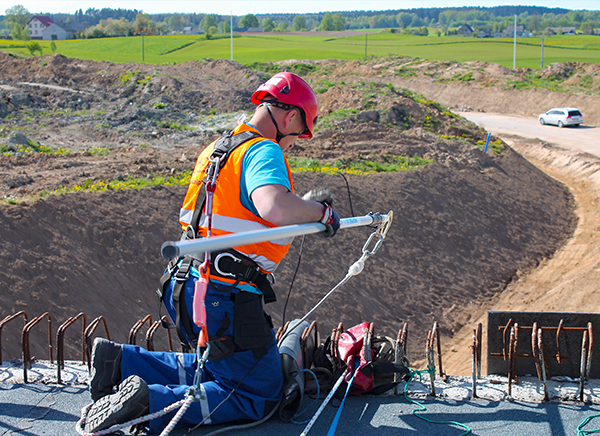
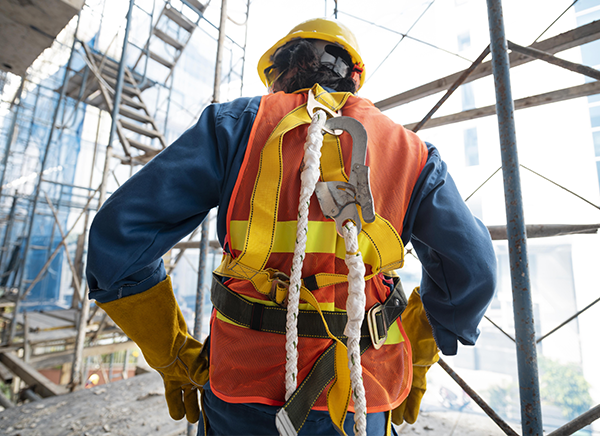
The NPORS N723 Harness and Fall Arrest Course deals with those practical decisions. Candidates learn how to check and fit a harness, recognise common equipment faults and understand the difference between stopping someone reaching an edge and arresting a fall after it has begun.

Training is available at our centre in Wellingborough. We can also deliver the course at suitable workplaces across the UK using equipment agreed before the booking.

Call Construction and Plant Training Services on 01234 604 151 to discuss your requirements, dates and prices.

Who Should Take the N723 Course?

The course is intended for people who may need to wear a safety harness or use personal fall-protection equipment at work.

Candidates may include:

  • MEWP operators.
  • Roof and maintenance workers.
  • Steel erectors and cladding teams.
  • Scaffolders and access workers.
  • People working on vehicles, machinery or fixed structures.
  • Utilities and telecommunications employees.
  • Supervisors responsible for monitoring harness use.
  • Experienced workers requiring refresher training.


Previous harness experience is not required for the training route.

N723 focuses on harnesses and fall-protection equipment. It does not qualify someone to operate a MEWP, erect scaffolding, carry out rope access work or design a fall-protection system.
Additional training may be required for the equipment and task involved.

A Harness Is Not the First Control

Personal fall protection should not be selected simply because harnesses are available.

Before choosing it, the work-at-height hierarchy must be considered. The first option is to avoid working at height where reasonably practicable. If the work cannot be avoided, equipment or workplace measures that prevent a fall should be considered.

Guardrails, protected platforms, scaffolds and suitable MEWPs can protect everyone in the work area without relying on each person to connect correctly.

A harness system may be appropriate when collective protection cannot provide sufficient control or when it forms part of the planned access method.

The decision should be based on the task, location and risk assessment rather than habit.

What Does the NPORS N723 Course Cover?

The programme is based on the equipment used during the course and the manufacturer’s instructions supplied with it.

Topics can include:

  • Responsibilities when using personal fall protection.
  • Work-at-height planning and risk assessment.
  • Different harness and lanyard systems.
  • Work restraint and fall arrest.
  • Equipment labels and identification.
  • Webbing, stitching, buckles and connectors.
  • Energy-absorbing lanyards.
  • Inertia-reel or retractable systems.
  • Compatibility between components.
  • Pre-use checks and defect reporting.
  • Correct harness fitting and adjustment.
  • Selection of a suitable anchor point.
  • Fall distance, clearance and swing-fall hazards.
  • Weather and surrounding conditions.
  • Emergency and rescue arrangements.
  • Cleaning, storage and end-of-use checks.


The exact practical content will depend on the equipment agreed for the booking.

Work Restraint and Fall Arrest

The terms restraint and arrest describe different systems.

A work-restraint system is arranged to prevent the user from reaching a place where a fall could occur. Its length and attachment position should keep the person inside the protected working area.

A fall-arrest system does not prevent the fall from starting. It is designed to stop the person before they strike a lower surface or obstruction.

This distinction affects the harness, lanyard, anchor position and clearance needed below the user.

Where restraint can provide effective protection, allowing a fall to take place may introduce unnecessary risk. The system should always match the planned work.

Checking a Harness Before Use

A pre-use check should be completed before the equipment is worn.

The user should look at the webbing, stitching, adjustment points, buckles, attachment rings, connectors and identification label. Lanyards, energy absorbers and retractable devices also need attention.

Possible reasons for removing equipment from use include:

  • Cuts, tears or heavy abrasion.
  • Damaged or loose stitching.
  • Heat, chemical or paint contamination.
  • Distorted or corroded metal components.
  • Connectors that do not close correctly.
  • Missing or unreadable labels.
  • An energy absorber that has started to deploy.
  • Damage following a fall or other exceptional event.


Suspect equipment should be isolated and reported. It should not be repaired informally or returned to use because the damage appears minor.

Formal Harness Inspections

Pre-use checks are only one part of the inspection arrangements.

HSE recommends a formally recorded detailed inspection at least every six months. Where equipment is used frequently or in harsh conditions, inspections may be required at least every three months.

Interim inspections can also be necessary where the risk assessment identifies conditions that may cause faster deterioration.

The manufacturer may specify additional or shorter intervals. Those instructions, the type of equipment and the conditions of use must all be considered.

A user check does not replace a detailed inspection by a competent person. In the same way, a current inspection record does not remove the need to look at the equipment before each use.

Fitting and Adjusting the Harness

Harnesses need to suit the individual wearing them.

In practical exercises, candidates are taught how to correctly orientate themselves and then don and adjust the straps without twisting the webbing.

The gear needs to be snug but flexible enough to allow movement and perform the assigned task. Loose straps may alter body posture in the event of a fall, whereas overtightening will hinder movement and cause discomfort.

Attachments need to be used for their intended purposes by the manufacturer. For example, a strap designed to hold tools cannot be used as an attachment point for fall arrest.

The harness fit needs to be confirmed prior to attaching the individual to the system.

Selecting an Anchor Point

The nearest available object is not automatically a safe anchor.

The selected point must be suitable for the system and capable of supporting the forces that could arise. Its position also affects fall distance, clearance and the possibility of the user swinging into a structure.

A low or poorly positioned anchor can increase the distance of a fall. It may also create a pendulum effect if the person is working some distance to one side.

The anchor, connector and lanyard must be compatible. Sharp edges and surfaces that could damage webbing or rope also need to be considered.

Where the suitability of an anchor cannot be confirmed, the system should not be used until competent advice has been obtained.

Fall Clearance and Swing Falls

Connecting a harness does not guarantee that the person will avoid the ground or another obstruction.

A fall-arrest system needs enough space to operate. The calculation may need to consider the lanyard length, deployment of the energy absorber, the user’s height, movement in the system and an additional safety allowance.

Retractable systems and fixed lanyards can require different clearance.

The position of the anchor matters as well. Working sideways from the connection can cause a swing fall, bringing the user into contact with steelwork, a wall or another part of the structure.

The required clearance and permitted working area should be established before work begins.

Rescue Must Be Planned

A person suspended in a harness may be unable to return to the working level without assistance.

The rescue arrangements need to be prepared before the equipment is used. They should reflect the location, access method, number of people available and type of fall-protection system.

Questions to address include:

  • How will the alarm be raised?
  • Can the person be reached safely?
  • What rescue equipment is required?
  • Who has been trained to use it?
  • Can the casualty be lowered or raised?
  • How will first aid be provided?
  • Can the rescue be completed promptly?


The plan should not depend entirely on the fire and rescue service.

N723 introduces the need for rescue planning. It does not automatically provide the specialist practical training needed to carry out every type of height rescue.

Harnesses Used in MEWPs

Harness requirements vary according to the MEWP, task and risk assessment.

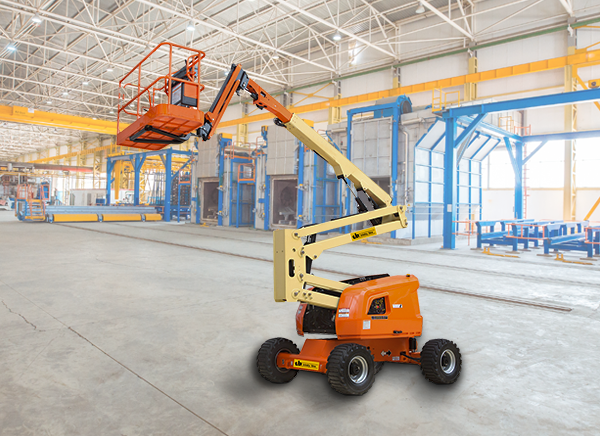
For many boom-type platforms, a short work-restraint lanyard connected to the manufacturer-provided anchor point may be appropriate. The aim is normally to keep the occupant inside the platform rather than allow a fall outside it.

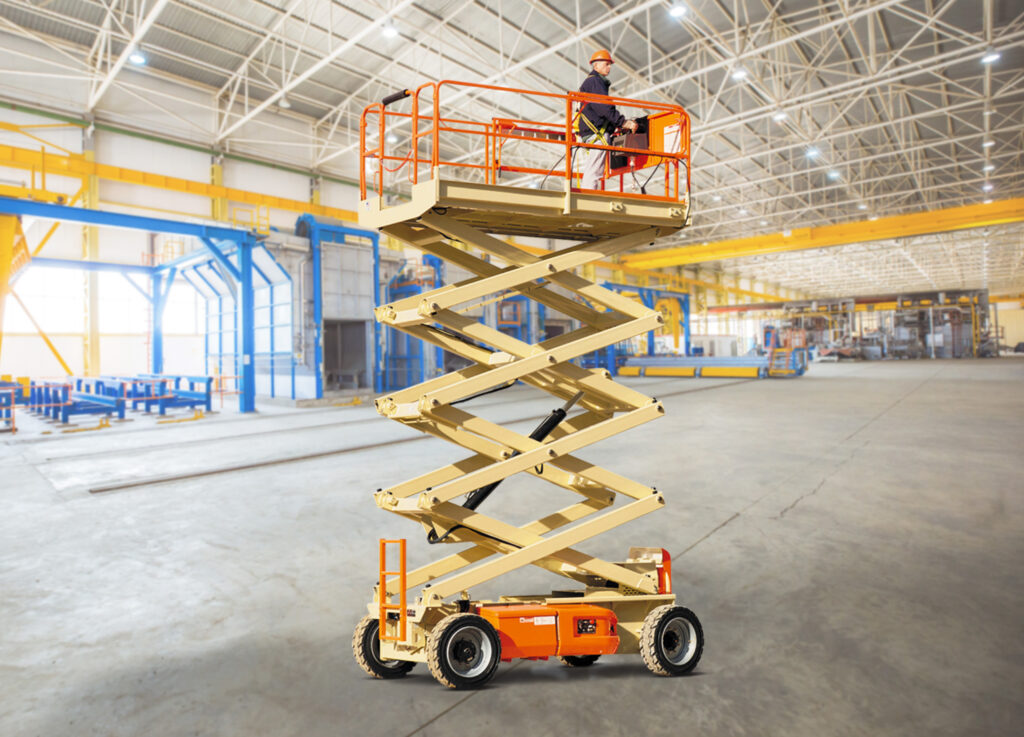
Requirements for vertical scissor lifts can be different. A harness should not be added automatically without considering the manufacturer’s instructions and the risks of the task.

N723 covers the harness system. Operators still require training for the relevant MEWP category, such as NPORS N108 MEWP Boom or N109 MEWP Scissor Lift.

Equipment Care and Storage

Harnesses and lanyards should be stored in accordance with their manufacturer’s instructions.

They should normally be kept clean, dry and protected from direct sunlight, chemicals, sharp objects and other sources of damage.

Wet equipment should be dried naturally rather than placed against an unsuitable heat source. Cleaning products should only be used when permitted by the manufacturer.

Equipment should also be protected during transport. Throwing a harness into a toolbox with sharp components or allowing it to become contaminated can shorten its usable life.

Assessment and NPORS Registration

Candidates complete theory and practical assessment activities.

They may be asked to identify equipment, carry out checks, fit and adjust a harness and explain how the selected system relates to the planned task.

The assessment also checks understanding of anchor points, equipment compatibility, common defects, storage and rescue arrangements.

Successful candidates receive the relevant NPORS N723 registration or certification.

The exact NPORS product, registration route and validity period should be confirmed when the course is booked. The course should not automatically be described as providing a three-year operator card without checking the current arrangements.

How Long Does the N723 Course Take?

The timetable depends on the candidates’ previous experience, group size, equipment and amount of practical training required.

A small group using one familiar harness system may need a different programme from a team covering several lanyards, retractable devices and workplace applications.

We will confirm the duration and attendance times after reviewing the booking requirements.

Training in Wellingborough or at Your Workplace

The NPORS N723 Harness and Fall Arrest Course is available at our training centre in Wellingborough, Northamptonshire.

On-site delivery can also be arranged at suitable workplaces across the UK.

For workplace training, the customer will normally need to provide:

  • A suitable area for theory and practical instruction.
  • The harness systems used by the workforce.
  • Manufacturer information for the equipment.
  • Current inspection records where applicable.
  • Suitable anchor arrangements for agreed exercises.
  • A controlled area away from normal work activity.
  • Appropriate welfare facilities.


We will review the proposed equipment and practical arrangements before confirming the course.

Book the NPORS N723 Harness and Fall Arrest Course

When contacting CPTS, tell us what work the candidates carry out, which harness systems they use and whether training is required in Wellingborough or at your workplace.

This helps us confirm whether N723 covers the required duties or whether additional MEWP, working-at-height or rescue training should also be considered.

Call 01234 604 151 or send us an enquiry for current dates and prices.

FAQ - NPORS N723 Harness and Fall Arrest Course

What is the NPORS N723 Harness and Fall Arrest Course?

N723 provides training and assessment in selecting, checking, fitting and using safety harnesses and personal fall-protection equipment. It also covers anchor points, work restraint, fall arrest, equipment storage and rescue planning.

Who should take the N723 course?

The course is suitable for people who may need to wear a harness at work, including MEWP operators, maintenance workers, roof workers, steel erectors and employees working on vehicles, machinery or fixed structures.

What is the difference between work restraint and fall arrest?

A work-restraint system prevents the user from reaching a position where a fall could occur. A fall-arrest system allows a fall to begin but is designed to stop the person before they strike a lower surface or obstruction.

Does N723 qualify me to operate a MEWP?

No. N723 covers harnesses and fall-protection equipment. Separate operator training is required for a MEWP, such as the NPORS N108 MEWP Boom or N109 MEWP Scissor Lift course.

How often should a safety harness be inspected?

The user should complete a pre-use check at the start of each shift. HSE recommends a formally recorded detailed inspection at least every six months, or at least every three months for frequently used equipment or arduous conditions. Manufacturer instructions may require different intervals.

Does the course include practical harness fitting?

Yes. Practical training can include checking the equipment, putting on the harness, adjusting the straps and confirming the correct fit. Exercises depend on the harnesses and systems agreed for the course.

Does N723 include height rescue training?

N723 covers the need for emergency and rescue planning. It does not automatically provide the specialist practical training required to carry out every type of height rescue. Separate rescue training may be needed for the planned work.

How long does the N723 course take?

The duration depends on the candidates’ experience, group size, equipment and practical content. CPTS will confirm the timetable after reviewing the harness systems and workplace duties included in the booking.

What NPORS card or certificate will I receive?

Successful candidates receive the relevant NPORS N723 registration or certification. The exact product, registration route and validity period will be confirmed when the course is booked.

Can N723 training be delivered at our workplace?

Yes. On-site delivery can be arranged at suitable workplaces across the UK. You will normally need an appropriate training area, the harness systems used by your workforce, manufacturer information and suitable arrangements for the agreed practical exercises.

How much does the NPORS N723 course cost?

The price depends on the number of candidates, location, equipment and course format. Contact CPTS with details of the work and harness systems for a quotation.

REQUEST COURSE DATES OR LET US KNOW YOUR SPECIFIC COURSE REQUIREMENTS

Other NPORS courses

Thank you for contacting us!

We appreciate your message and will respond as soon as possible.